Knife Skills: Mastering Essential Techniques for Every Cook
Developing strong knife skills is arguably the most fundamental aspect of culinary proficiency. Far beyond merely cutting ingredients, superior knife work transforms your cooking experience. It enhances safety, boosts efficiency, and significantly improves the presentation and consistency of your dishes. Therefore, whether you are a novice home cook or an aspiring professional, dedicating time to refine these essential techniques will profoundly impact your kitchen endeavors. This comprehensive guide will delve into the critical components of mastering your knives, from choosing the right tools to executing precise cuts.
Why Master Knife Skills? The Foundation of Great Cooking
Understanding the importance of excellent knife skills extends beyond simply slicing and dicing. Indeed, these abilities form the bedrock upon which all other culinary techniques are built. Consequently, investing in their development yields numerous tangible benefits in your kitchen.
Safety First: Preventing Accidents
Perhaps the most crucial benefit of proper knife handling is enhanced safety. Surprisingly, dull knives are often more dangerous than sharp ones because they require more force to cut, increasing the likelihood of slippage and injury. However, with sharp tools and correct techniques, you maintain control, significantly reducing the risk of nicks and cuts. Furthermore, learning proper grip and body mechanics ensures that your fingers remain safely away from the blade.

Efficiency and Speed: Saving Time in the Kitchen
Efficient cutting directly translates to faster meal preparation. When you possess confident knife skills, you can breeze through tasks that might otherwise feel tedious or time-consuming. Moreover, consistent cuts cook more evenly, preventing some pieces from overcooking while others remain undercooked. This consistency, therefore, contributes to a better final product and a smoother cooking process.
Consistency and Presentation: Elevating Your Dishes
Precise and uniform cuts not only cook better but also look more appealing on the plate. Imagine a beautifully plated salad with perfectly julienned vegetables or a stew with evenly diced ingredients. Consistency in size and shape is a hallmark of professional cooking, and it is entirely achievable with practice. Thus, mastering these techniques elevates the aesthetic appeal of your culinary creations.
Essential Tools for Developing Your Knife Skills
Before you can master various cuts, it is imperative to equip yourself with the right tools. Investing in quality knives and accessories is a wise decision, as they are extensions of your hand. Nevertheless, you do not need an extensive collection; a few key pieces will suffice.
The Chef’s Knife: Your Primary Workhorse
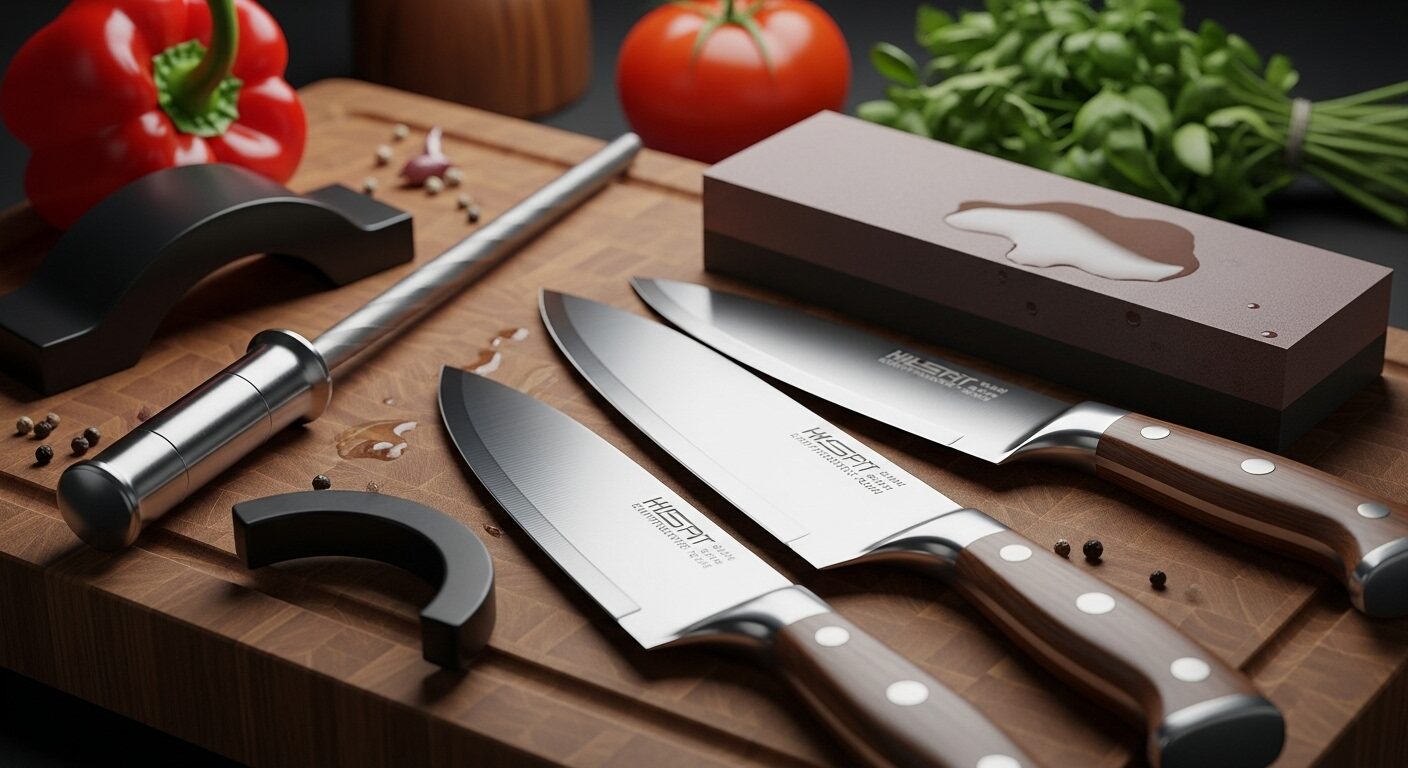
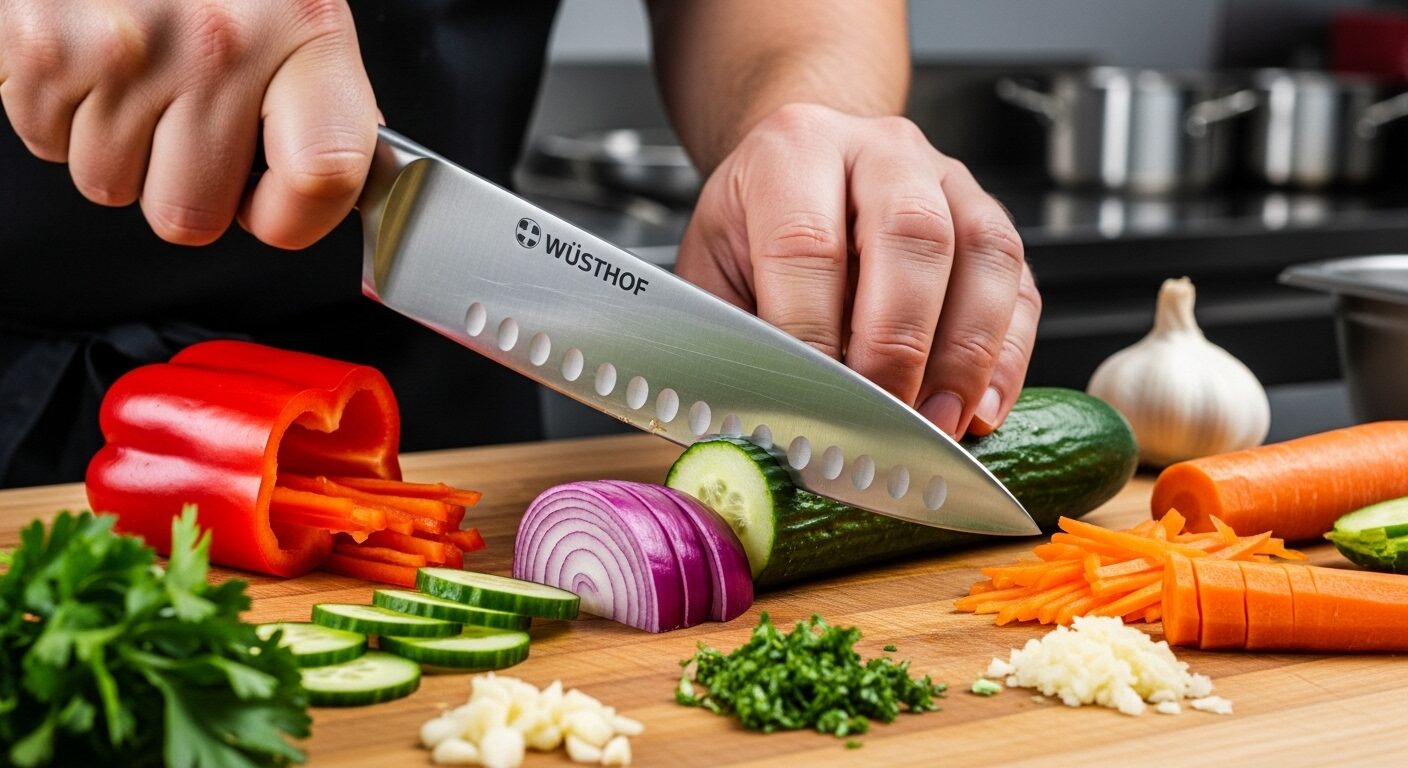
Undoubtedly, the chef’s knife is the most versatile tool in any kitchen. Typically ranging from 8 to 10 inches, it is designed for a wide variety of tasks, including slicing, dicing, mincing, and chopping. When selecting a chef’s knife, consider its balance, weight, and how comfortably it fits in your hand. Ultimately, a good chef’s knife will feel like a natural extension of your arm.
Paring Knives and Utility Knives
While the chef’s knife handles most large tasks, a paring knife (2-4 inches) is indispensable for smaller, more intricate work. Think peeling fruits and vegetables, deveining shrimp, or mincing garlic. A utility knife (5-6 inches) bridges the gap between the chef’s and paring knives, useful for tasks that are too large for a paring knife but too small for a chef’s knife, such as slicing sandwiches or trimming smaller cuts of meat.
Sharpening and Honing Tools
A sharp knife is a safe and effective knife. Therefore, a honing steel is crucial for daily maintenance, realigning the blade’s edge between sharpenings. For actual sharpening, a whetstone or an electric sharpener will restore a dull edge. Remember, consistent maintenance is key to prolonging the life and performance of your knives.
Cutting Boards: The Unsung Hero
A stable and appropriate cutting surface is just as important as the knife itself. Wooden or high-density plastic cutting boards are preferred over glass or stone, which can quickly dull your blades. Furthermore, ensure your board is non-slip, perhaps by placing a damp cloth underneath it, to prevent dangerous movement during cutting.
Fundamental Knife Grips and Stances
Proper grip and stance are foundational to developing excellent knife skills. These techniques provide control, stability, and comfort, enabling you to work safely and efficiently. Consequently, mastering them should be your first priority.
The Pinch Grip: Control and Precision
The pinch grip is the most recommended way to hold a chef’s knife. You pinch the blade between your thumb and the side of your index finger, just in front of the bolster (where the blade meets the handle). Your remaining fingers wrap around the handle. This grip offers superior control over the blade, allowing for more precise movements and stability. Conversely, holding the knife solely by the handle reduces control and can lead to fatigue.
The Claw Grip: Protecting Your Fingers
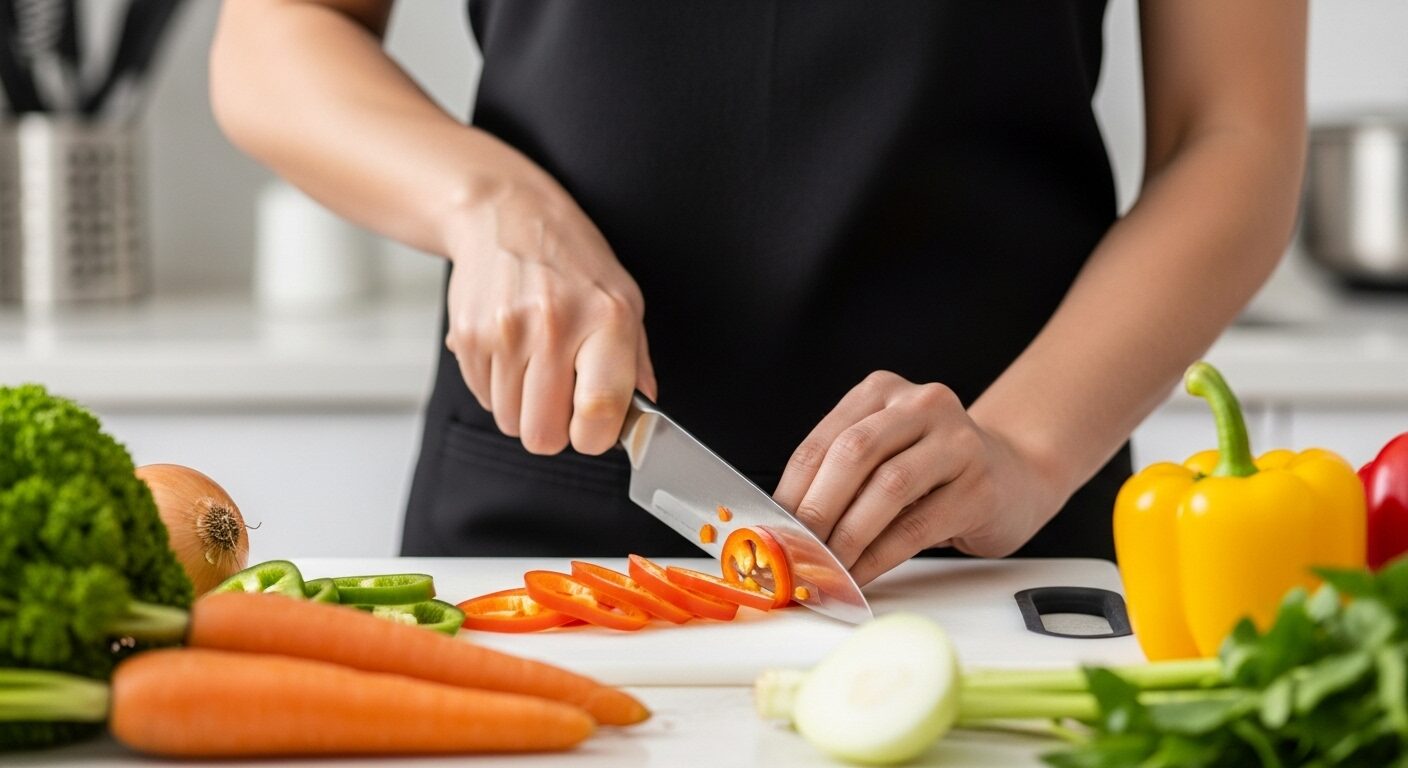
While the pinch grip concerns your knife hand, the claw grip protects your guiding hand. Curl your fingertips inward, tucking them firmly against your knuckles. The side of your knuckles then acts as a guide for the knife blade, keeping your fingertips safely out of harm’s way. As you cut, the knife slides along your knuckles, moving backward as you progress through the ingredient. This technique is paramount for safety.
Proper Stance and Board Placement
Adopt a stable stance with your feet shoulder-width apart. Stand comfortably close to your cutting board, ensuring your arm has a full range of motion without straining your back or shoulders. Position the cutting board directly in front of you, allowing for clear visibility and comfortable reach. A good setup prevents fatigue and promotes concentration, which is vital for precise knife work.
Mastering Basic Knife Cuts
With the right tools and proper grip, you are ready to tackle fundamental knife cuts. Each cut has a specific purpose and appearance, and practicing them consistently will significantly improve your overall knife skills.
The Slice: From Julienne to Batonnet
Slicing is a broad category, encompassing various shapes and sizes. The most common include:
- Julienne: Thin matchsticks, typically 1/8 inch x 1/8 inch x 2 inches. Ideal for quick-cooking vegetables or garnishes.
- Batonnet: Thicker sticks, 1/4 inch x 1/4 inch x 2.5 inches. Often the starting point for dicing.
- Rondelle: Round or oval slices, common for carrots or cucumbers.
- Diagonal Slice: Elongated oval slices, often used to increase surface area for faster cooking or aesthetic appeal.
To achieve clean slices, use a smooth, continuous motion, rocking the knife from tip to heel (or heel to tip) while maintaining the claw grip on your guiding hand.
The Dice: Small, Medium, and Large
Dicing involves transforming batonnet or other uniform shapes into cubes. Consistency is key here for even cooking. The standard dice sizes are:
- Small Dice (Brunoise): 1/8 inch cubes. Created from julienned pieces.
- Medium Dice: 1/4 inch cubes. Created from batonnet pieces.
- Large Dice: 1/2 to 3/4 inch cubes. Often used for stews or heartier dishes.
The process typically involves creating uniform planks, then batonnet, and finally dicing them into cubes. Therefore, accuracy in the initial cuts is paramount for a consistent dice.
Mincing: Garlic and Herbs
Mincing reduces ingredients to very fine, almost paste-like pieces. This technique is particularly useful for aromatics like garlic, ginger, and herbs, allowing their flavors to disperse evenly throughout a dish. After roughly chopping the ingredient, use a rocking motion with your chef’s knife, keeping the tip on the board and pivoting the heel. Gather the ingredients frequently and continue rocking until the desired fineness is achieved.
Chopping: Rough Cuts for Mirepoix
Chopping refers to less precise, often larger cuts used when uniformity is not the primary concern, such as for mirepoix (celery, carrots, onions) that will be strained out of a stock. While less precise than dicing, it still benefits from good technique to ensure pieces are roughly similar in size for even cooking. This often involves a simple up-and-down motion with the knife, ensuring safety with the claw grip.
Chiffonade: Perfect for Leafy Greens
The chiffonade cut is specifically for leafy greens and herbs, producing thin ribbons. To execute, stack several leaves (like basil or spinach), roll them tightly into a cigar shape, and then slice across the roll with your knife. This creates beautiful, delicate strips perfect for garnishes or quick-cooking applications. Furthermore, it helps prevent bruising of delicate leaves.
Advanced Knife Skills and Techniques
Once comfortable with basic cuts, you can explore more advanced knife skills that further expand your culinary repertoire. These often involve breaking down larger ingredients into smaller, usable portions.
Breaking Down a Chicken
Learning to butcher a whole chicken allows for significant cost savings and provides fresh, perfectly sized pieces for various recipes. This involves separating the legs, thighs, wings, and breasts, often requiring precise cuts through joints and along bones. A sharp chef’s knife and sometimes a boning knife are essential for this task. Moreover, you can use the carcass for making flavorful stock, reducing waste.
Filleting Fish
Filleting a whole fish transforms it into boneless, skinless portions. This delicate task requires a flexible filleting knife and a steady hand. The goal is to remove the flesh from the bones with minimal waste, leaving clean, attractive fillets. Precision is key here, as improper technique can leave valuable meat on the frame.
Tournée Cuts: The Art of Vegetable Turning
The tournée cut is a classic French technique that involves shaping vegetables (like potatoes, carrots, or zucchini) into uniform, seven-sided, barrel-like shapes. While primarily for aesthetic appeal in fine dining, practicing this cut dramatically improves your knife control, dexterity, and consistency. It is a challenging but rewarding skill that hones your precision.
Practicing and Maintaining Your Knife Skills
Mastery of knife skills is not achieved overnight; it requires consistent practice and diligent maintenance. However, the effort is well worth the reward.
Regular Practice: The Key to Improvement
The adage
Conclusion
Mastering knife skills is a journey that profoundly impacts every aspect of your cooking. From ensuring safety and maximizing efficiency to elevating the presentation and consistency of your dishes, the benefits are undeniable. By understanding the importance of proper tools, adopting correct grips and stances, and diligently practicing fundamental and advanced cuts, you will transform your culinary abilities. Remember, patience and persistence are key; with each precise slice and dice, you build confidence and expertise, ultimately making your time in the kitchen more enjoyable and rewarding.
want to read more visit our other blogs
Big Shoutout to the guys who made this blog happen Asim Ali.
Frequently Asked Questions (FAQ)
Q1: How often should I sharpen my knives?
A1: It’s generally recommended to hone your knife with a honing steel before or after each use to realign the blade’s edge. True sharpening (using a whetstone or electric sharpener) depends on usage, but for a home cook, once every few months or when you notice the knife struggling to cut cleanly is usually sufficient. A sharp knife is safer and more efficient.
Q2: What is the most important knife skill to learn first?
A2: The most important knife skill to master initially is proper grip (pinch grip for the knife hand) and the claw grip for your guiding hand. These techniques are fundamental for safety and control, forming the basis for all other cuts. Once these are solid, practicing basic slicing and dicing with consistency should be your next focus.
Q3: Can I learn advanced knife skills without professional training?
A3: Absolutely! While professional training provides structured learning, many advanced knife skills can be learned through dedicated self-practice. Utilize online tutorials, cookbooks, and consistent kitchen work. Focus on understanding the mechanics of each cut, practicing regularly, and paying close attention to safety. Start with simpler tasks and gradually progress to more complex ones like butchering or filleting.