Classic French Desserts: Timeless Treats & Recipes
The Enduring Allure of Classic French Desserts
French patisserie holds a revered place in culinary history. It captivates palates worldwide. Indeed, the mere mention of “Classic French desserts” evokes images of delicate artistry and exquisite flavors. These sweet creations are more than just food. They represent a rich cultural heritage, perfected over centuries. Consequently, they offer a delightful journey through France’s gastronomic landscape. Each dessert, from rustic tarts to elaborate layered cakes, tells a story of tradition, innovation, and passion. Therefore, understanding these culinary masterpieces provides a deeper appreciation for French cuisine.
A Legacy of Sweet Perfection
Initially, many sweet dishes were simple, often fruit-based. However, with the advent of professional patissiers and the availability of sugar, more complex recipes emerged. For instance, Marie Antoinette’s love for pastries, as well as the culinary innovations of figures like Antonin Carême, propelled French desserts to international fame. Consequently, techniques like puff pastry, choux pastry, and intricate sugar work became hallmarks of French baking. This legacy continues to inspire bakers and dessert enthusiasts globally.
Iconic Classic French Desserts You Must Try
Exploring the pantheon of Classic French desserts reveals a diverse array of textures, tastes, and presentations. Each one is a testament to the meticulous skill and creativity of French bakers. Below, we delve into some of the most beloved and iconic examples.
Macarons: Colorful Delicacies
Macarons are perhaps one of the most visually stunning Classic French desserts. These delicate, almond-meringue-based cookies feature a crisp shell and a soft, chewy interior. Moreover, they are typically filled with ganache, buttercream, or jam. Originating in Italy, they were refined in France, notably in Parisian patisseries. Their vibrant colors and diverse flavor profiles, from pistachio to raspberry, make them a popular choice. Consequently, mastering the macaron is a true test of a pastry chef’s precision.
Crème Brûlée: The Golden Standard
Crème Brûlée, meaning “burnt cream,” is a quintessential French dessert. It is known for its rich custard base and a contrasting, brittle caramelized sugar top. This dessert offers a delightful textural experience. The satisfying crack of the caramelized sugar, followed by the smooth, creamy vanilla custard, is truly unforgettable. Historically, similar desserts existed across Europe; however, the French version gained widespread acclaim. It is a simple yet elegant dessert, often flavored with vanilla bean.
Tarte Tatin: Upside-Down Magic
The story of Tarte Tatin is legendary. It is attributed to the Tatin sisters who, in a moment of delicious serendipity, accidentally created an “upside-down” apple tart. This rustic yet sophisticated dessert features caramelized apples baked beneath a buttery pastry crust. After baking, it is inverted, revealing beautifully browned, tender apples. Furthermore, the rich caramel sauce that forms during baking is simply irresistible. It is often served warm with a dollop of crème fraîche.
Éclairs and Profiteroles: Choux Pastry Wonders
Both éclairs and profiteroles showcase the versatility of choux pastry. Éclairs are elongated pastries filled with cream (often pastry cream or custard) and topped with a glaze, usually chocolate. Their name, meaning “lightning” in French, refers to how quickly they are eaten. Profiteroles, on the other hand, are small, round choux pastry balls. These are often filled with ice cream or whipped cream and drizzled with chocolate sauce. Both are delightful examples of light yet indulgent French treats.
Mille-Feuille (Napoleon): Layers of Bliss
Mille-Feuille, or “thousand leaves,” is an architectural marvel among Classic French desserts. It consists of three layers of puff pastry, alternating with two layers of rich pastry cream. A dusting of powdered sugar, a glaze, or intricate marbling often adorns the top. The challenge lies in achieving perfectly crisp, flaky pastry and smooth, creamy filling. This dessert offers an incredibly satisfying crunch with every bite. Indeed, it is a true celebration of texture.
Mousse au Chocolat: Velvety Indulgence
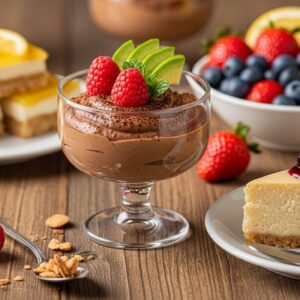
For chocolate lovers, Mousse au Chocolat is an absolute must-try. This light, airy, yet intensely flavored dessert combines rich chocolate with whipped egg whites or cream. The result is a smooth, velvety texture that melts in your mouth. Its simplicity belies its profound depth of flavor. Often served chilled, sometimes with a dollop of crème chantilly, it exemplifies sophisticated comfort food.
Paris-Brest: A Wheel of Delight
Created in 1891 to commemorate the Paris-Brest bicycle race, this dessert is shaped like a bicycle wheel. It features a ring of choux pastry, often topped with sliced almonds, and filled with a praline-flavored cream. The nutty, caramelized notes of the praline complement the light pastry perfectly. It is a substantial and satisfying pastry, embodying both elegance and a touch of athletic history.
Opéra Cake: A Symphony of Flavors
The Opéra Cake is a sophisticated French dessert. A chocolate glaze typically covers the entire cake. Its precise layers and complex flavor profile make it a true masterpiece of patisserie. Each bite offers a harmonious blend of coffee and chocolate.
The Art of French Patisserie: Techniques and Ingredients
Crafting Classic French desserts requires both precision and an understanding of fundamental techniques. French patisserie is renowned for its exacting standards. These standards yield consistently beautiful and delicious results.
Mastering Basic Pastry Doughs
The foundation of many French desserts lies in their doughs.
- Puff Pastry (Pâte Feuilletée): This dough, characterized by its numerous delicate layers, is crucial for items like Mille-Feuille and vol-au-vents. It involves repeatedly folding butter into dough, creating steam pockets during baking.
- Shortcrust Pastry (Pâte Sablée/Brisée): A rich, crumbly dough perfect for tarts like Tarte Tatin. It’s made by rubbing cold butter into flour, then adding minimal liquid to bind. The key is to handle it minimally to prevent gluten development.
Essential Ingredients for Authentic Flavors
The quality of ingredients profoundly impacts the final taste of Classic French desserts.
- Butter: High-quality unsalted butter is paramount. French butter, known for its high fat content and rich flavor, contributes significantly to pastry texture and taste.
- Eggs: Fresh, large eggs are essential for structure, richness, and emulsification in custards, creams, and mousses.
- Flour: All-purpose flour is common, but specific recipes might call for finer pastry flour.
- Vanilla: Pure vanilla extract or, ideally, vanilla beans, impart an unparalleled aroma and flavor.
- Chocolate: High-quality dark chocolate is crucial for ganaches, mousses, and glazes.
Bringing Classic French Desserts to Your Kitchen
While the thought of baking Classic French desserts might seem daunting, many are surprisingly accessible to home bakers. With patience and attention to detail, you can recreate these delightful treats.
Tips for Home Bakers
- Read the Recipe Carefully: Before starting, understand each step. French recipes are often precise.
- Measure Accurately: Use a kitchen scale for dry ingredients, especially flour and sugar, for best results.
- Temperature Matters: Pay close attention to ingredient temperatures (e.g., cold butter for pastry, room temperature eggs for macarons).
- Don’t Rush: Patisserie often requires chilling times or gradual steps. Allow ample time.
- Practice Makes Perfect: Some techniques, like piping choux pastry or folding puff pastry, improve with repetition.
Simplifying Complex Recipes
For example, store-bought puff pastry can be an excellent shortcut for a quick Mille-Feuille. Similarly, focusing on one element, like perfecting a crème anglaise, can build confidence before tackling a full dessert. Online tutorials and reputable cookbooks also offer step-by-step guidance, making these elegant creations achievable for anyone.
Conclusion
Classic French desserts are more than just confections; they are edible works of art, steeped in history and tradition. From the delicate crunch of a macaron to the velvety richness of a chocolate mousse, these treats offer an unparalleled sensory experience. Mastering the techniques and understanding the ingredients behind these iconic sweets allows home bakers to bring a touch of Parisian elegance into their own kitchens. Ultimately, exploring the world of Classic French desserts is a delightful journey, celebrating the enduring allure of French patisserie.
Frequently Asked Questions (FAQ)
Q1: What makes French desserts “classic”?
Many, like crème brûlée or macarons, have become iconic symbols of French culinary artistry.
Q2: Are Classic French desserts difficult to make at home?
A2: While some Classic French desserts involve intricate techniques, many are surprisingly accessible to home bakers. Recipes for simpler desserts like mousse au chocolat or crème brûlée can be quite straightforward. Furthermore, with patience, accurate measurements, and practice, even more complex pastries like éclairs become achievable. Modern recipes often offer helpful tips and shortcuts.
Q3: What is the most famous Classic French dessert?
Macarons, crème brûlée, and croissants (though often eaten for breakfast, they are a pastry) are arguably among the most famous. Their widespread popularity and distinct characteristics make them immediately recognizable symbols of French patisserie.