The Wok Hei Illusion: My First Taste of True Regional Cooking
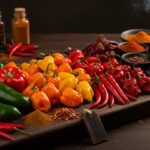
Fire roared. The carbon-steel wok clanged against the cast-iron burner. I watched Chef Wang effortlessly toss a handful of dried Erjingtiao chilies into smoking rapeseed oil. A sharp, stinging smoke instantly filled the cramped Chengdu kitchen, catching the back of my throat. I coughed, eyes watering. He didn’t blink. This was my initiation into the visceral, unyielding world of authentic gastronomy. Forget the syrupy, cornstarch-laden takeout I grew up eating on Friday nights; this was primal energy translated onto a plate. the best chinese food are their.
Understanding the true depth of chinese food requires dismantling decades of Westernized misconceptions. We often reduce this ancient, continent-spanning dietary culture to a monolithic menu of General Tso’s chicken and fried rice. That reduction erases a pedagogical culinary history spanning over five millennia. To truly grasp the subject, we must analyze the interplay of climate, agricultural trade routes, and philosophical concepts like Yin and Yang that dictate how ingredients are paired to maintain bodily harmony.
Executive Summary: The Eight Great Traditions
| Culinary Region | Flavor Profile & Philosophy | Signature Ingredient / Technique |
|---|---|---|
| Sichuan (Chuan) | Bold, pungent, numbing, and spicy (Málà). | Sichuan Peppercorn, Pixian Doubanjiang |
| Cantonese (Yue) | Subtle, fresh, highlighting natural sweetness. | Wok Hei, Steaming, Oyster Sauce |
| Shandong (Lu) | Salty, crispy, tender, heavily relying on broths. | Bao (quick fry), Black Vinegar, Seafood |
| Jiangsu (Su) | Sweet, savory, soft, precise presentations. | Red Braising, Knife Skills, River Fish |
| Zhejiang (Zhe) | Mellow, non-greasy, delicate fragrance. | Longjing Tea, Bamboo Shoots, Shaoxing Wine |
| Fujian (Min) | Light, umami-rich, sour and sweet accents. | Red Yeast Rice, Supreme Broths, Mountain Foraging |
| Hunan (Xiang) | Dry-hot (Gan la), sour, heavily smoked. | Pickled Chilies, Smoked Pork, Fermented Beans |
| Anhui (Hui) | Earthy, rustic, focused on temperature control. | Wild Herbs, Stone Frogs, Pangolin (Historical) |
Decoding the Eight Traditions of Authentic Chinese Food
Most casual diners are familiar with Cantonese and perhaps Sichuan fare, but the culinary topography of China is officially categorized into the Eight Great Traditions (Ba Da Cai Xi). Each regional style was forged by specific geographical constraints and historical epochs.
Sichuan (Chuan) and Hunan (Xiang): The Spice Vectors
Sichuan cuisine is famous for its Málà flavor profile—a synchronized attack of heat and numbing sensations. The numbing effect comes from hydroxy-alpha sanshool, a compound found in Sichuan peppercorns that literally alters the tactile receptors on your lips and tongue. This isn’t spice for the sake of pain; it’s a sophisticated method developed to combat the suffocating humidity of the Sichuan basin. Hunan cuisine, conversely, employs ‘Gan la’ or dry spice. Lacking the numbing peppercorn, Hunan chefs utilize an arsenal of pickled, fermented, and fresh chilies to create an aggressive, straightforward heat that cuts through the rich, smoked pork prevalent in the mountainous province.
Cantonese (Yue): The Pinnacle of Freshness
Southern China’s Pearl River Delta offers an absolute abundance of agriculture and seafood. Consequently, Cantonese chefs worship the natural integrity of the ingredient. Heavy sauces are viewed as a crutch, an insult to a freshly caught grouper or a perfectly reared chicken. The defining metric of a Cantonese master is their control over the wok. Achieving ‘Wok Hei’—the breath of the wok—requires searing ingredients at exact temperatures where the Maillard reaction occurs instantly, caramelizing sugars and searing proteins without trapping moisture. For those interested in the rigorous thermodynamics involved, you can study the science of wok hei and heat transfer, which mathematically proves why home stoves often fail to replicate restaurant-quality sear.
Shandong (Lu) and Jiangsu (Su): The Imperial Legacy
Moving north, the climate cools drastically. Shandong cuisine is the foundation of the culinary arts in northern China, historically serving the imperial courts of Beijing. It relies heavily on quick frying techniques (Bao) and robust broths derived from hours of simmering pork and poultry bones. Vinegar and alliums play leading roles. Down the eastern coast, Jiangsu cuisine reflects the wealth and sophistication of the ancient water towns. Precision is paramount here. The knife skills required to execute dishes like Squirrel Fish—where a whole fish is deboned and cross-hatched so the meat blooms outward like a pinecone when fried—demand years of solitary practice.
Zhejiang (Zhe), Fujian (Min), and Anhui (Hui): Elegance and Earth
Zhejiang offers a mellow, slightly sweet profile, famous for incorporating Longjing green tea directly into wok-fried river shrimp. Fujian leans heavily on umami, utilizing red yeast rice and fish sauce, creating complex, slow-simmered soups. The legendary ‘Buddha Jumps Over the Wall’ soup, requiring dozens of premium ingredients like abalone and sea cucumber simmered for days, hails from here. Finally, Anhui cuisine, born from an isolated mountainous region, is purely rustic. It relies on wild-foraged herbs, bamboo shoots, and fermentation as a primary method of preserving proteins through brutal winters.
Essential Techniques Behind Eastern Culinary Mastery
Recognizing the regions is only the first step. The execution of these diverse flavor profiles hinges on techniques rarely practiced in Western kitchens. Velvetting, for instance, is the secret behind the impossibly tender meat found in stir-fries. By marinating sliced proteins in a slurry of cornstarch, egg white, and Shaoxing wine, then briefly passing them through warm oil or boiling water before the final high-heat stir-fry, a microscopic protective barrier is formed. This barrier locks in cellular moisture and prevents the intense wok heat from seizing the muscle fibers.
Red Braising (Hongshao) is another foundational pillar. This technique involves caramelizing rock sugar in oil until it reaches a dark amber hue, then introducing the protein (usually pork belly) to coat it in the molten sugar before deglazing with dark soy sauce, light soy sauce, and copious amounts of Shaoxing wine. Aromatics like star anise, cassia bark, and black cardamom are added, and the mixture is simmered until the collagen breaks down into a gelatinous, rich sauce. The result is deeply savory, slightly sweet, and visually striking due to the mahogany gloss.
The Core Pantry: Building Genuine Chinese Food Flavors
You cannot build a house without bricks. Similarly, attempting to recreate genuine regional dishes without the correct pantry staples is an exercise in frustration. The substitution of generic supermarket soy sauce for a properly brewed, artisanal product immediately caps the potential of your dish.
First, differentiate your soy sauces. Light soy sauce provides salinity and umami; dark soy sauce provides color and a subtle molasses-like depth. They are not interchangeable. Next is Chinkiang vinegar (Zhenjiang), a black rice vinegar with a complex, woody, and almost smoky profile essential for balancing rich, fatty dishes. For heat, Pixian Doubanjiang is non-negotiable for Sichuan cooking. This fermented chili and broad bean paste undergoes years of fermentation under the sun, developing a savory, earthy fire that forms the backbone of Mapo Tofu and Twice-Cooked Pork.
We also must acknowledge the reliance on fermented black beans (Douchi). These tiny, salt-cured soybeans pack an extraordinary punch of glutamic acid. When mashed with garlic and ginger, they form the classic black bean sauce that elevates everything from steamed spare ribs to wok-tossed bitter melon. Navigating these ingredients is much like exploring diverse culinary narratives at https://famousfoodblog.com/, where the focus remains strictly on authenticity over convenience.
The Global Evolution of Chinese Food Culture
The diaspora has carried these culinary traditions across the globe, forcing adaptations based on local agriculture and consumer palates. In the 19th century, laborers migrating to the United States during the Gold Rush faced a total absence of their native ingredients. They adapted, utilizing local vegetables like celery and onions, creating the first iteration of American-Chinese cuisine. Chop Suey, Egg Foo Young, and later, General Tso’s Chicken, were brilliant, necessary survival adaptations. They deserve respect as a distinct, historically significant sub-cuisine, rather than being dismissed merely as ‘inauthentic.’
Today, we are experiencing a renaissance. Modern supply chains allow chefs in London, New York, and Sydney to import fresh Sichuan peppercorns and authentic Chinkiang vinegar. This logistical triumph has birthed a new era where regional specialists are earning accolades once reserved exclusively for French fine dining. To see how these establishments rank against globally recognized fine dining standards, one only needs to consult the Michelin Guide’s recent expansions into mainland China and its recognition of regional specialists abroad. The juxtaposition of a humble street food vendor in Xi’an pulling biang biang noodles against a three-star tasting menu in Shanghai proves the immense elasticity of the cuisine.
Street Fare vs. Imperial Dining
There is a fascinating duality within the culture. On one end of the spectrum is the vibrant, chaotic ecosystem of street food. Night markets in Taipei or hawker centers in Singapore are sensory overloads. Here, specialization is absolute. A vendor might spend fifty years perfecting a single dish—jianbing (savory crepes), roujiamo (shredded braised pork in a flatbread), or cong you bing (scallion pancakes). The turnover is furious. The flavors are unapologetically loud, designed to instantly satisfy a physical craving.
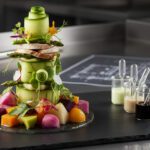
Conversely, imperial dining—rooted deeply in the aforementioned Shandong tradition—is a study in extreme restraint and visual poetry. Historical banquets, such as the legendary Manchu-Han Imperial Feast, consisted of hundreds of courses served over three days. These meals were less about immediate caloric satisfaction and more about demonstrating immense wealth, political power, and philosophical alignment with the seasons. Ingredients were rare and incredibly difficult to procure: bear paws, camel humps, and bird’s nests. While these specific ingredients are largely outlawed or frowned upon today due to conservation efforts, the philosophy of the imperial banquet lives on in high-end modern tasting menus that prioritize texture, rarity, and theatrical presentation.
Agriculture and the North-South Divide
Why do northerners eat dumplings while southerners eat rice? The answer lies strictly in the dirt. The geographical divide of the Qinling Mountains and the Huai River dictates the climate. The damp, subtropical south is perfectly suited for paddy rice cultivation. The arid, cold north supports wheat and millet. This agricultural reality birthed two entirely distinct carbohydrate cultures. Northern cuisine is dominated by bing (flatbreads), mantou (steamed buns), and jiaozi (dumplings). Southern cuisine relies on rice bowls, rice noodles (hefen), and glutinous rice snacks. Understanding this dichotomy requires a look at the agricultural histories of rice and wheat cultivation, which meticulously document how climate fundamentally shaped regional diets over millennia.
Regional Asian Cuisine Masterpieces to Try at Home
Transitioning from theory to practice requires courage, a high-BTU burner, and a well-seasoned wok. If you want to truly grasp the mechanics of this food, start with Mapo Tofu. This Sichuan masterpiece requires layering flavors sequentially. You begin by rendering minced beef or pork until crispy, removing it, and then blooming Pixian Doubanjiang in the residual fat until the oil turns a brilliant ruby red. You add fermented black beans, garlic, and ginger, followed by a light chicken broth. The silken tofu is gently poached in this fiery liquid. Finally, a cornstarch slurry thickens the sauce so it clings to the tofu, and a heavy dusting of freshly ground roasted Sichuan peppercorn is applied right before serving. The execution takes less than ten minutes, but the resulting depth of flavor tastes like it took days.
For a study in delicate textures, attempt Steamed Fish with Scallion and Ginger. A fresh, whole fish (typically sea bass or tilapia) is scored and steamed just until the flesh turns opaque. The genius of the dish lies in the finishing technique. Heaps of julienned ginger and scallions are piled atop the steamed fish. Smoking hot oil is then poured directly over the aromatics, flash-frying them and releasing their essential oils over the delicate meat. A splash of seasoned light soy sauce pools at the bottom, creating a flawless emulsion of fish juice, oil, and soy. It is an ephemeral masterpiece that must be consumed immediately.
The Future of Modern Gastronomy
As we look forward, the boundaries of what defines traditional cooking are expanding. A new generation of chefs, trained in classic French brigades but returning to their heritage, are deconstructing and reimagining ancient recipes. We are seeing techniques like lacto-fermentation, precision sous-vide, and hydrocolloid manipulation applied to classic flavor profiles. Imagine a xiaolongbao (soup dumpling) where the traditional pork aspic is replaced with a clarified, intensified abalone consommé, encased in a dough tinted black with squid ink and perfectly calibrated for elasticity. The aesthetics are modern, but the spiritual core of the dish remains untouched.
This evolution proves that chinese food is not a static museum exhibit trapped in the past. It is a living, breathing culinary language. It adapts, it borrows, and it refines. By understanding the rigorous techniques, the vital pantry ingredients, and the profound regional differences, we elevate our dining experiences from mere consumption to true gastronomic appreciation. The journey from that sweltering, smoke-filled kitchen in Chengdu to a Michelin-starred dining room in Hong Kong is vast, but the underlying respect for fire, flavor, and balance remains wonderfully constant.