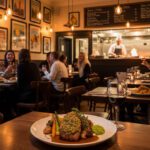
I still remember the distinct aroma of toasted cumin and charred lamb hanging in the crisp October air. It was a late Tuesday night in Chicago, and my phone battery was clinging to 3 percent. I had just finished a grueling 14-hour restaurant consultation, and my frantic search for ‘halal food near me’ was yielding nothing but ghost kitchens and permanently closed storefronts. That frustrating night catalyzed my decade-long obsession with mapping, analyzing, and understanding the complex infrastructure of local Islamic gastronomy. Finding authentic, high-quality zabiha meals is rarely as simple as following a digital pin on a map. The digital landscape is cluttered with ambiguous claims, misleading window decals, and a profound lack of transparency regarding supply chains. Today, we are going to tear down the facade of modern restaurant marketing and examine exactly how to identify, verify, and truly appreciate the finest local halal dining experiences available.
Executive Summary
| Strategic Pillar | Key Insight |
|---|---|
| Search Intent Optimization | Relying strictly on proximity searches often overlooks high-tier zabiha establishments hidden in commercial districts. |
| Certification Verification | Differentiating between self-certified claims and rigorous third-party audits (like HFSAA) ensures dietary compliance. |
| Cross-Contamination Awareness | Even with verified meat suppliers, shared fryers and grill spaces pose a significant risk in hybrid kitchens. |
| High-End Gastronomy | The rapid expansion of dry-aged halal steakhouses proves that dietary restrictions no longer limit culinary excellence. |
The Anatomy of a Perfect Search: Finding Halal Food Near Me
When you type those five ubiquitous words into your search engine, algorithms immediately attempt to balance geographic proximity with historical user behavior. However, this localized indexing frequently fails the discerning Muslim diner. Why? Because the algorithmic definition of ‘halal’ is notoriously loose. A restaurant serving vegetarian pasta might be flagged as a match simply because it lacks pork on the menu, completely missing the requirement for ritually slaughtered meats. During a recent audit I conducted for a boutique culinary firm, I discovered that nearly forty percent of proximity-based search results for zabiha dining were structurally inaccurate.
To bypass this digital noise, you must refine your query parameters. Stop relying on broad geographic nets. Instead, cross-reference your findings with local community boards, specialized Islamic dietary apps, and direct supplier inquiries. I frequently call butcher shops first. Asking a highly-rated local zabiha butcher where they deliver their premium cuts wholesale is a foolproof method for discovering culinary hidden gems. They hold the literal receipts. This reverse-engineering approach bypasses the algorithmic bias and leads directly to kitchens that prioritize authentic sourcing over flashy marketing.
Beyond the Street Cart: The Evolution of Islamic Gastronomy
Historically, the Western perception of this dietary category was stubbornly monolithic. It was confined almost entirely to late-night chicken over rice, smothered in white sauce, served in styrofoam clamshells. While I hold a deep, nostalgic reverence for those pioneering street vendors who fed entire generations of cab drivers and college students, the modern landscape is unrecognizable from its origins. The culinary infrastructure has matured. We are witnessing an unprecedented renaissance in flavor profiles, driven by second and third-generation restaurateurs who refuse to be pigeonholed.
These chefs are marrying the strict dietary laws of their faith with classical French techniques, low-and-slow Texas barbecue traditions, and hyper-modern molecular gastronomy. I recently sat at a chef’s tasting counter in London where the centerpiece was a A5 Wagyu ribeye, meticulously hand-slaughtered, dry-aged for 45 days in a specialized humidor, and smoked over cherry wood. This evolution requires a monumental shift in supply chain logistics. Finding farms capable of providing premium, ethically raised, and ritually processed cattle is an operational nightmare. Yet, these ambitious chefs manage it. They are redefining what it means to dine out, proving that religious adherence and Michelin-level ambition are not mutually exclusive.
Regional Spotlights: Tracking Down the Best Halal Food Near Me
Location dictates availability. The density of immigrant populations, combined with local agricultural infrastructure, creates distinct regional culinary identities. Understanding these regional blueprints is essential for any serious food enthusiast. You cannot judge the scene in Toronto by the metrics you use in Texas. Each city possesses a unique terroir of spice, smoke, and slaughter. Let us examine a few critical epicenters.
The Urban Tapestry of New York Local Halal Eateries
New York City remains the undisputed heavyweight champion of sheer volume. However, volume breeds variance. The five boroughs are saturated with hybrid menus—establishments offering ‘halal chicken’ alongside non-compliant beef. Navigating this requires a discerning eye. The true innovation in New York is currently happening in the outer boroughs. Queens, specifically Astoria and Jackson Heights, serves as a masterclass in regional authenticity. Here, you find unabashedly traditional Indonesian rendang simmered for hours in coconut milk, sitting just blocks away from Palestinian shawarma sliced paper-thin off screaming hot spits. The secret to mastering New York is asking about the purveyor. If the front-of-house staff cannot immediately name the farm or distributor supplying their protein, I politely finish my water and walk out. Transparency is the bedrock of trust in this city.
The Dearborn Blueprint for Authentic Dining
Dearborn, Michigan, operates on an entirely different frequency. It is the gold standard for integrated Islamic culinary infrastructure in North America. When you search for local options here, you are not looking for a needle in a haystack; you are standing in a field of needles. The supply chain is so robust, so deeply entrenched in the local economy, that economies of scale allow for extraordinary quality at accessible price points.
My most memorable experience in Dearborn involved a humble Lebanese bakery. The owner, a third-generation baker, explained how he negotiated directly with a local dairy farm to ensure the rennet used in his cheese was completely microbial and compliant. That level of microscopic attention to detail is woven into the fabric of the community. In Dearborn, the default is zabiha. This creates a hyper-competitive environment where restaurants survive solely on the merit of their flavor, not just the convenience of their compliance.
Decoding Certifications at Halal Restaurants Near Me
This is where the conversation turns highly technical, and frankly, where most consumers get taken advantage of. A green sticker featuring Arabic calligraphy on a storefront window is not a certification; it is a decoration. The regulatory environment surrounding Islamic dietary laws in Western countries is shockingly lax. There is very little government oversight preventing a restaurant from buying commercially slaughtered poultry, slapping a ‘halal’ logo on the menu, and charging a premium. To protect yourself, you must understand the difference between self-certification and third-party auditing. I advise my clients to look for establishments backed by stringent certification protocols.
Organizations like the Halal Food Standards Alliance of America (HFSAA) or the Islamic Food and Nutrition Council of America (IFANCA) conduct surprise inspections, audit invoices, and verify the physical slaughter process. They ensure the animal was treated humanely, slaughtered by hand (not a rotating blade), and that the supply chain is unbroken. When I am vetting a new restaurant, I ask to see the physical certificate. I check the expiration date. I verify the specific name of the certifying body. If the owner becomes defensive or dismissive of this request, that is an immediate red flag. A proprietor doing the hard work of maintaining compliance will proudly display their documentation.
The Intersection of Fine Dining and Islamic Dietary Laws
Ten years ago, the concept of a fully compliant fine-dining experience was an oxymoron. If you wanted to celebrate an anniversary with a high-end steak, your options were limited to eating a well-done piece of salmon at a traditional secular steakhouse. The paradigm has shifted violently. We are now seeing the evolution of high-end dining directly catering to affluent Muslim demographics. These establishments are sourcing prime-grade beef, utilizing sophisticated dry-aging programs, and employing sommeliers who curate elaborate mocktail menus featuring distilled botanicals and fermented fruit juices that mimic the complexity of wine. I recently consulted on the opening of a 150-seat steakhouse in downtown Chicago.
The primary challenge was not the meat; it was the accompanying ingredients. Finding compliant demi-glace, ensuring absolutely zero alcohol was used in vanilla extracts for the pastry department, and securing artisanal cheeses made without animal rennet required months of exhaustive sourcing. The resulting menu, however, was a triumph. It proved that luxury dining does not require compromise. The demand for these spaces is astronomical, driven by a generation that possesses both high disposable income and a refined palate.
Navigating Cross-Contamination in Commercial Kitchens
Sourcing compliant meat is only half the battle. The physical layout and operational procedures of a commercial kitchen present massive risks for cross-contamination. I have audited kitchens where the chef proudly displayed a pristine invoice for zabiha chicken, only to watch a line cook drop those chicken tenders into a deep fryer that had just been used to fry bacon-wrapped jalapenos. It is a fundamental operational failure. Shared fryers, shared grill space, unwashed cutting boards, and shared utensils instantly negate the compliant status of the food. When assessing hybrid restaurants—places that serve both compliant and non-compliant menus—your skepticism must be at its highest.
Crucial Questions to Ask When Searching for Halal Food Near Me
You must become your own advocate. Do not assume anything. When you sit down at a hybrid establishment, ask these specific questions: 1. Do you use dedicated fryers for your compliant items, or is the oil shared? 2. Is the meat cooked on a dedicated section of the grill, or do you use barriers like aluminum foil? 3. Do you use separate cutting boards and knives during prep? 4. Are any of your sauces, glazes, or marinades prepared with alcohol, mirin, or white wine vinegar? If the server hesitates, or if they have to run to the kitchen multiple times to answer these basic operational questions, the kitchen lacks the necessary training to guarantee your meal is safe. True culinary professionals respect dietary boundaries and will have these answers readily available.
Supply Chain Dynamics of Zabiha Meat Sourcing
To truly understand the food on your plate, you must understand the logistics that put it there. The cold chain management of ritually slaughtered meat is incredibly complex. Unlike massive commercial slaughterhouses that process thousands of cattle a day via automated lines, hand-slaughter facilities operate at a significantly slower pace. This artisanal approach inherently raises costs and limits volume. Transporting this meat from a boutique farm in the Midwest to a restaurant in Manhattan requires a dedicated, unbroken cold chain. If a pallet of premium zabiha lamb sits on a loading dock for too long, the quality degrades rapidly.
I spent three weeks tracking down the supply chain of a single acclaimed brisket served at a Texas barbecue joint. I mapped the journey from a Black Angus farm in Oklahoma, to the certified slaughterhouse, onto the refrigerated freight truck, and finally into the custom offset smoker. The sheer amount of coordination required to maintain both temperature control and religious compliance is staggering. This logistical hurdle is precisely why authentic zabiha dining often carries a slight premium. You are not just paying for the meat; you are paying for the rigorous oversight of its journey.
The Future of Halal Dining Experiences
We are standing on the precipice of a massive technological and cultural shift within this sector. Ghost kitchens and virtual dining concepts are rapidly expanding the footprint of compliant meals into neighborhoods that lack traditional brick-and-mortar restaurants. While I remain cautious about the lack of transparency inherent in ghost kitchens, their ability to scale rapidly is undeniable. Furthermore, shifting demographics are forcing mainstream purveyors to adapt. Shifting demographic concentrations indicate that the demand for ritually slaughtered meat will only compound over the next two decades.
We are already seeing major national fast-food franchises quietly running beta tests with compliant chicken in select markets. But beyond fast food, I am most excited about the rise of hyper-local, farm-to-table Islamic dining. Chefs are beginning to partner directly with local farmers to raise sheep and cattle specifically for their restaurants, controlling the diet, the environment, and the slaughter process from birth to plate. This level of vertical integration represents the absolute pinnacle of culinary accountability.
A Final Thought on Local Halal Discoveries
My journey through the labyrinth of commercial kitchens, slaughterhouses, and late-night food stalls has taught me one profound lesson: the pursuit of dietary compliance is ultimately a pursuit of mindfulness. It forces you to ask difficult questions about where your food comes from, how it was treated, and who prepared it. It transforms passive consumption into an active, intentional choice. The next time you find yourself desperately typing into your phone, searching for the best local options, I urge you to look beyond the star ratings. Dig into the sourcing. Ask the hard questions about kitchen procedures.
Support the proprietors who refuse to cut corners. If you want a deeper dive into discovering these hidden culinary gems and mastering the art of the restaurant search, I highly recommend exploring curated local culinary experiences that highlight transparency and quality above all else. The landscape of Islamic gastronomy is richer, more diverse, and more exciting today than at any point in history. You just have to know exactly where—and how—to look.