Seekh Kebab Recipe BBQ: How to Get That Perfect Smoky Char

You’ll learn the essential spices and meat preparation that give authentic seekh kebabs their signature flavor and texture. We’ll walk through proper BBQ setup techniques to maximize smokiness, plus proven grilling methods that deliver that perfect charred exterior while keeping the inside juicy. We’ll also cover common mistakes that can ruin your kebabs and exactly how to avoid them.
Get ready to impress your family and friends with seekh kebabs that rival your favorite restaurant.
Essential Ingredients for Authentic Seekh Kebabs
Prime Meat Selection and Fat Ratio for Juiciness
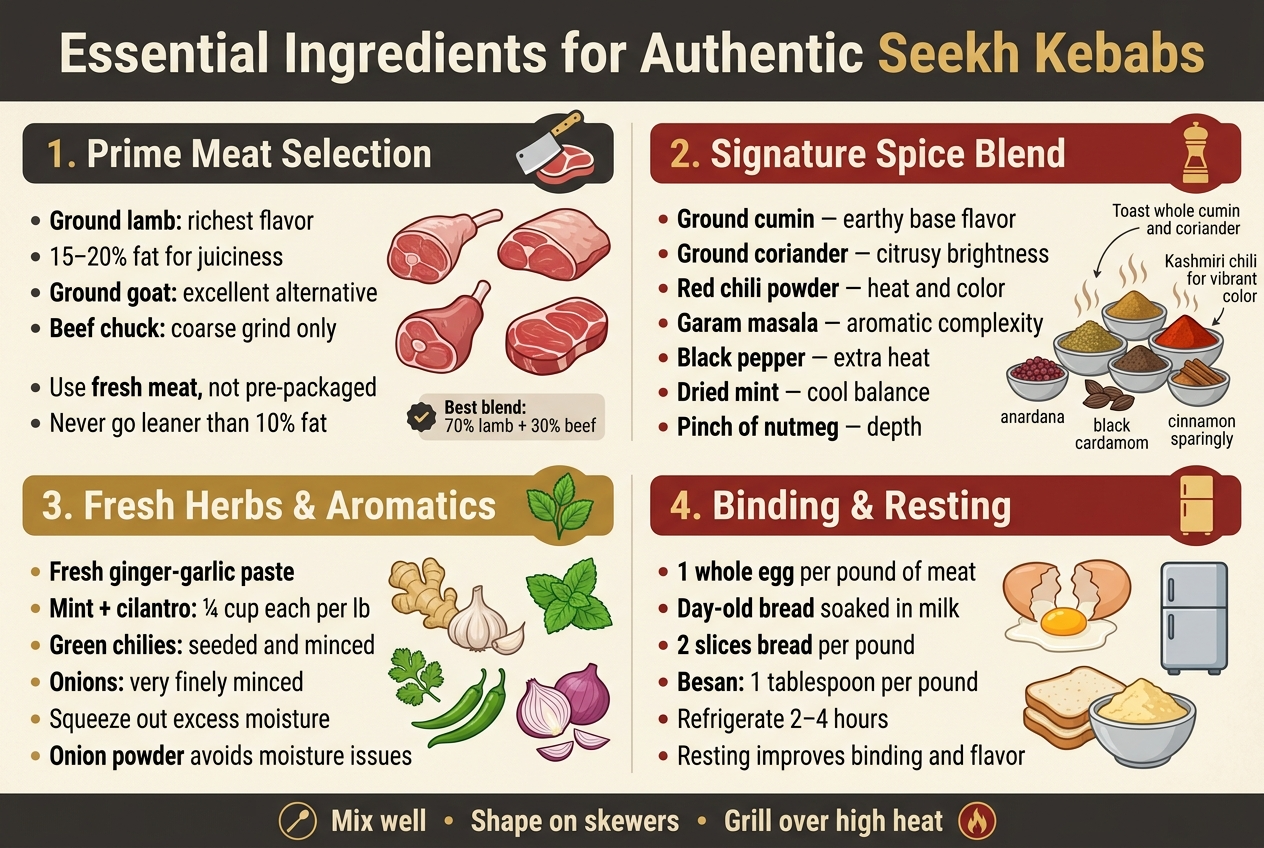
Ground lamb takes center stage in an authentic seekh kebab recipe BBQ, offering the richest flavor profile that’s been perfected over centuries. Look for lamb shoulder or leg meat with a fat content of 15-20% – this ratio creates kebabs that stay moist during high-heat grilling while developing that coveted crispy exterior. If lamb isn’t available, ground goat provides an excellent alternative with similar texture and taste.
Beef works well too, particularly chuck roast that’s been freshly ground. The key lies in asking your butcher to grind the meat coarsely rather than fine – this creates better texture and prevents the kebabs from becoming dense. Avoid pre-packaged ground meat that’s been sitting around, as fresh grinding makes a noticeable difference in both flavor and binding.
For those mixing meats, combine 70% lamb with 30% beef for a balanced flavor that’s not too gamey. The beef adds structure while the lamb contributes that distinctive taste. Never go leaner than 10% fat content, as your kebabs will turn out dry and crumbly on the grill.
Traditional Spice Blend That Creates Signature Flavor
The spice foundation starts with freshly ground cumin and coriander seeds – toasting them whole before grinding releases oils that pre-ground versions simply can’t match. Red chili powder provides heat, while garam masala adds warmth and complexity. Kashmiri chili powder works beautifully here, offering vibrant color without overwhelming heat.
| Core Spice | Amount (per 1 lb meat) | Purpose |
|---|---|---|
| Ground cumin | 2 tsp | Earthy base flavor |
| Ground coriander | 1½ tsp | Citrusy brightness |
| Red chili powder | 1-2 tsp | Heat and color |
| Garam masala | 1 tsp | Aromatic complexity |
Black pepper, preferably coarsely ground, adds a different kind of heat that complements the chili powder. Dried mint powder brings a subtle coolness that balances the warming spices, while a pinch of nutmeg adds depth without being obvious.
Regional variations include adding dried pomegranate seeds (anardana) for tanginess or black cardamom powder for a smoky note. Some recipes call for a touch of cinnamon, but use it sparingly – too much overwhelms the meat’s natural flavor.
Fresh Herbs and Aromatics for Authentic Taste
Fresh ginger-garlic paste forms the aromatic backbone of any respectable seekh kebab recipe BBQ. Make this paste yourself by grinding equal parts fresh ginger and garlic with just enough water to form a smooth consistency. Store-bought versions often contain preservatives that can affect the meat’s texture.
Fresh mint and cilantro leaves get chopped fine and mixed directly into the meat mixture. The mint provides cooling contrast to the spices, while cilantro adds brightness. Use about ¼ cup of each per pound of meat. Green chilies, seeded and minced, contribute fresh heat that’s different from dried spices.
Finely chopped onions require special attention – they need to be either very finely minced or squeezed of excess moisture after chopping. Too much moisture from onions can prevent proper binding and cause kebabs to fall apart on the grill. Some cooks prefer to use onion powder instead, which eliminates this moisture issue entirely.
Binding Agents That Hold Kebabs Together
Raw egg serves as the primary binding agent, with one whole egg sufficient for every pound of meat. The proteins in egg help bind everything together during cooking. Some recipes call for just egg white, but the yolk adds richness that’s worth keeping.
Breadcrumbs or soaked bread provide additional binding power. Use day-old bread soaked in milk, then squeezed dry before mixing in. This creates a softer texture than dried breadcrumbs while still providing structure. About two slices of bread work for one pound of meat.
Gram flour (besan) offers a traditional binding alternative that’s especially popular in restaurant-style preparations. It adds a subtle nutty flavor while helping the mixture hold together. Use sparingly – just one tablespoon per pound of meat.
The secret binding trick many home cooks miss is the resting period. After mixing all ingredients, refrigerate the mixture for at least 2-4 hours. This allows the proteins to develop and the flavors to meld, creating a mixture that naturally holds together better during grilling.
Preparation Techniques for Perfect Texture
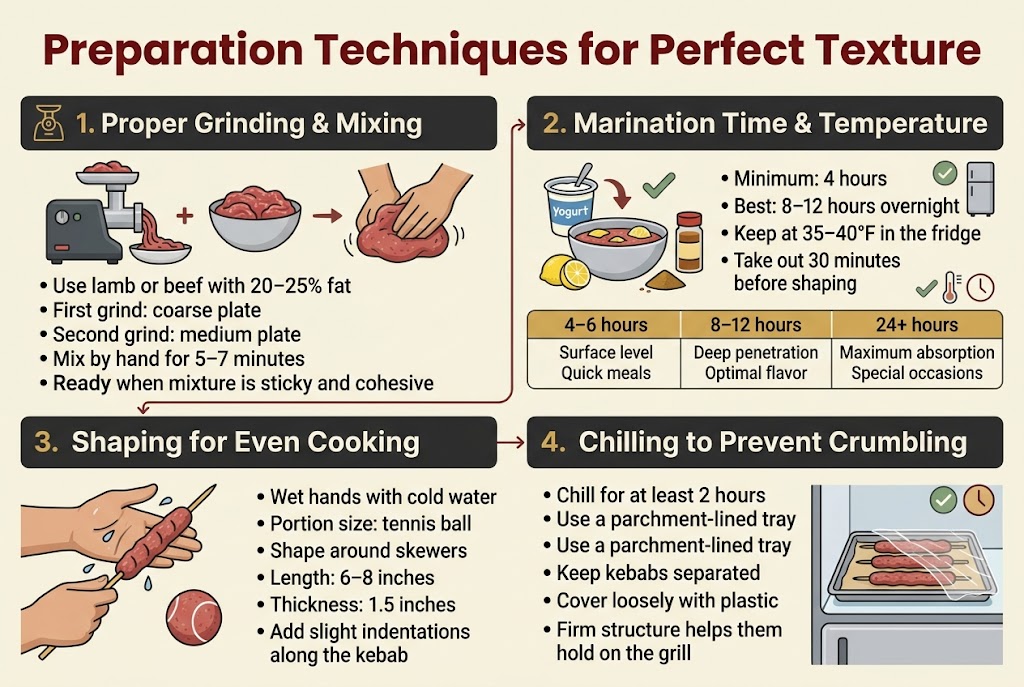
The foundation of exceptional seekh kebabs starts with how you handle your meat. Choose lamb or beef with about 20-25% fat content – this keeps your kebabs juicy and prevents them from drying out on the BBQ. When grinding, use a coarse plate first, then switch to a medium plate for the final grind. This two-step process creates the ideal texture that holds together beautifully.
Mix your spices directly into the meat using your hands – no shortcuts with spoons or mixers. The warmth and pressure from your hands help distribute flavors evenly while developing the meat’s natural proteins. Knead for about 5-7 minutes until the mixture becomes sticky and cohesive. You’ll know it’s ready when you can form a ball that doesn’t fall apart.
Marination Time and Temperature Guidelines
Your seekh kebab recipe BBQ success depends heavily on proper marination timing. Minimum marination time is 4 hours, but overnight (8-12 hours) delivers the best results. The acids in yogurt and lemon juice need time to break down tough fibers while spices penetrate deep into the meat.
Keep marinated meat between 35-40°F in your refrigerator. This temperature range slows bacterial growth while allowing flavor absorption. Take the meat out 30 minutes before shaping to bring it closer to room temperature – cold meat is harder to work with and doesn’t cook evenly.
| Marination Time | Flavor Penetration | Best For |
|---|---|---|
| 4-6 hours | Surface level | Quick meals |
| 8-12 hours | Deep penetration | Optimal flavor |
| 24+ hours | Maximum absorption | Special occasions |
Shaping Techniques for Even Cooking
Wet your hands with cold water before shaping – this prevents sticking and creates smoother surfaces. Take portions about the size of a tennis ball and roll them into sausage shapes around skewers. Press firmly but don’t compress too tightly, as this makes kebabs dense and chewy.
Create slight indentations along the length using your fingers. These grooves help the kebab cook evenly by allowing heat to penetrate from multiple angles. Make each kebab about 6-8 inches long and 1.5 inches thick for consistent cooking times.
Chilling Process to Prevent Crumbling
After shaping, refrigerate your kebabs for at least 2 hours before grilling. This chilling step firms up the fat and proteins, creating a stable structure that won’t fall apart on the grill. Place them on a tray lined with parchment paper, ensuring they don’t touch each other.
Cover loosely with plastic wrap to prevent moisture loss while maintaining airflow. Well-chilled kebabs develop a slight skin on the outside that helps them hold together during the initial searing phase of BBQ cooking.
BBQ Setup for Maximum Smoky Flavor
charcoal Selection and Fire Preparation
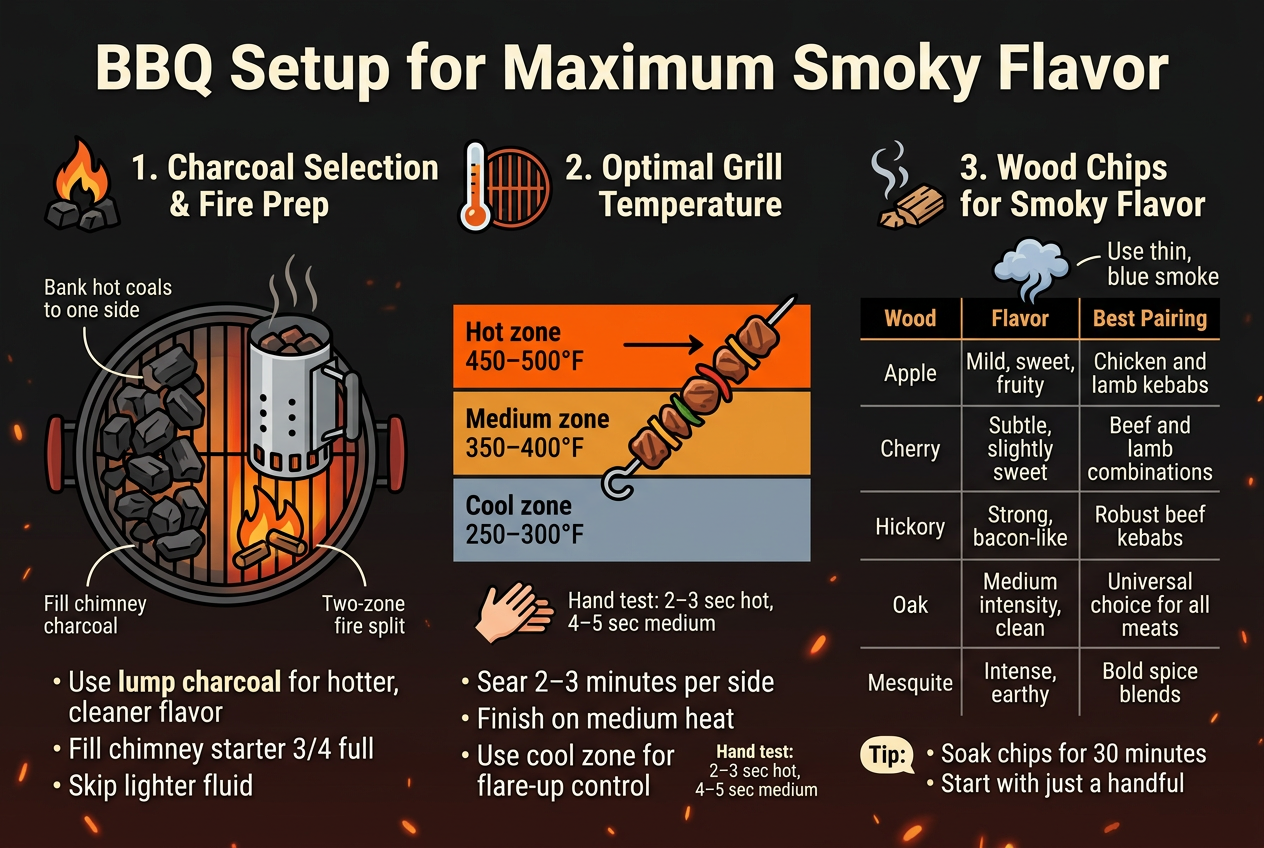
The foundation of any great seekh kebab recipe BBQ lies in choosing the right fuel. Lump charcoal beats briquettes every time for authentic flavor. The irregular chunks burn hotter and cleaner, creating those beautiful temperature variations that give kebabs their signature char. Light your charcoal using a chimney starter filled about three-quarters full. Skip the lighter fluid completely – it leaves behind chemical flavors that compete with your carefully spiced meat.
Once the coals glow orange with a light ash coating, you’re ready to build your fire. Bank the hot coals to one side of your grill, leaving the other side cooler. This two-zone setup gives you control over the cooking process. The hot side sears and chars, while the cooler side lets you finish cooking without burning the outside.
Fresh charcoal produces the cleanest smoke. Old, damp charcoal creates bitter, acrid flavors that overpower delicate spices. Store your charcoal in a dry place and replace it if it’s been sitting around for months.
Optimal Grill Temperature and Heat Zones
Temperature control separates backyard heroes from frustrated grillers. Your seekh kebab recipe BBQ needs a hot zone hitting 450-500°F for that perfect sear. Use a reliable thermometer – guessing leads to disappointment. The intense heat caramelizes the meat’s surface while keeping the interior juicy.
Create distinct temperature zones across your grill surface:
-
Hot zone (450-500°F): Initial searing and char development
-
Medium zone (350-400°F): Even cooking without burning
-
Cool zone (250-300°F): Finishing and warming
Position kebabs over the hot zone for 2-3 minutes per side to develop that coveted crust. Move them to the medium zone to cook through evenly. The cool zone serves as your safety net if flare-ups threaten to burn your beautiful work.
Test your heat zones by holding your hand five inches above the grates. You should only manage 2-3 seconds over the hot zone, 4-5 seconds over medium heat.
Wood Chip Varieties for Enhanced Smokiness
Wood chips transform good kebabs into unforgettable ones. Soak your chips for 30 minutes before grilling – this creates steady smoke instead of quick flames. Different woods bring unique flavor profiles that complement the spices in your kebabs.
Best Wood Choices for Seekh Kebabs:
| Wood Type | Flavor Profile | Best Pairing |
|---|---|---|
| Apple | Mild, sweet, fruity | Chicken and lamb kebabs |
| Cherry | Subtle, slightly sweet | Beef and lamb combinations |
| Hickory | Strong, bacon-like | Robust beef kebabs |
| Oak | Medium intensity, clean | Universal choice for all meats |
| Mesquite | Intense, earthy | Bold spice blends |
Avoid aggressive woods like mesquite if your spice blend is already complex – you want harmony, not competition. Start with just a handful of chips. You can always add more, but you can’t take away overwhelming smoke flavor.
Place soaked chips directly on hot coals or in a smoker box. The goal is thin, blue smoke that whispers flavor into your meat, not thick white clouds that bitter everything they touch.
Grilling Methods for Perfect Char
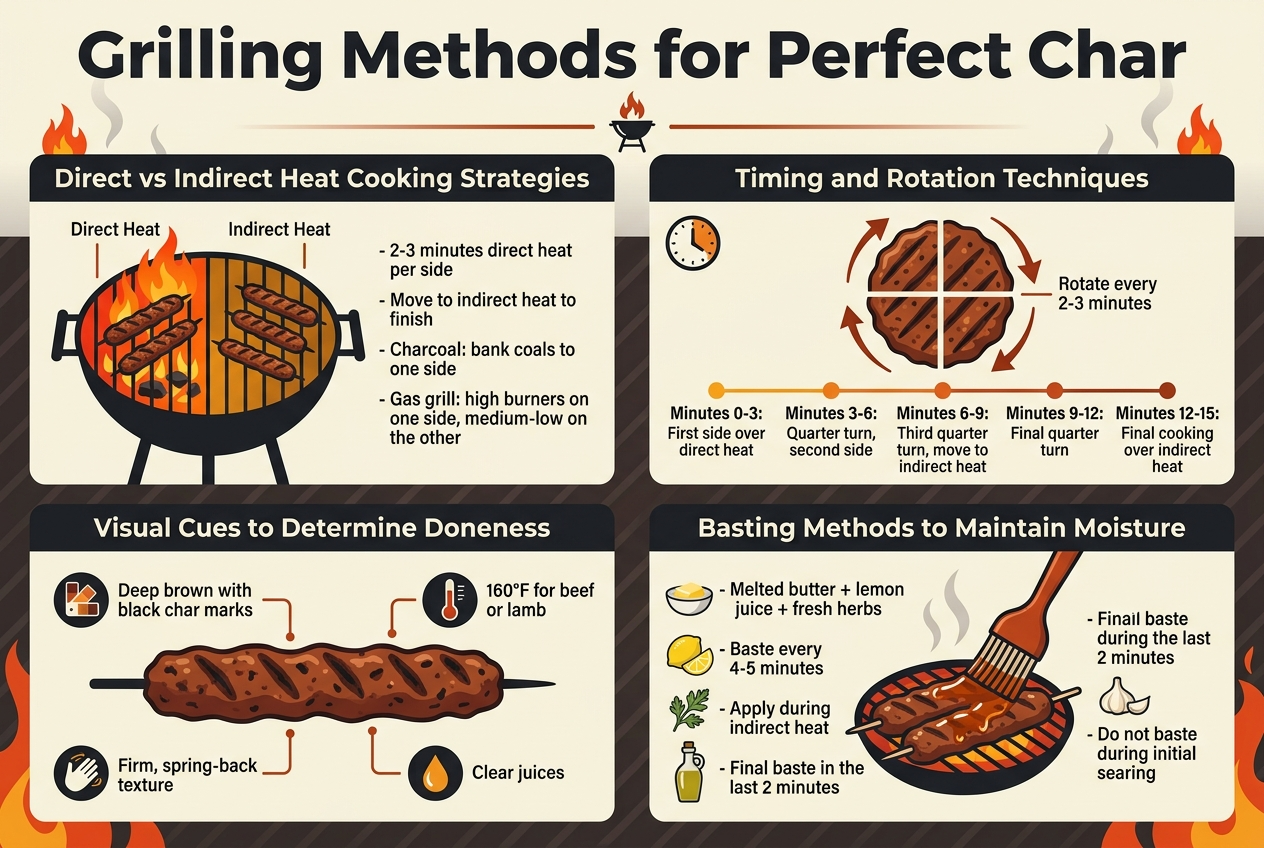
Direct vs Indirect Heat Cooking Strategies
The key to nailing that perfect seekh kebab lies in mastering your heat zones. Direct heat works best for achieving that coveted charred exterior – place your kebabs directly over the hottest part of your grill where flames can kiss the meat. This intense heat creates the Maillard reaction that gives you those beautiful dark spots and smoky flavor.
For indirect cooking, move your kebabs to a cooler section of the grill after getting that initial sear. This gentler approach helps cook the interior thoroughly without burning the outside. Smart grillers create a two-zone setup: high heat on one side for searing, moderate heat on the other for finishing.
When using charcoal, bank your coals to one side. Gas grills make this easier – simply turn some burners to high and others to medium-low. Start with 2-3 minutes of direct heat per side, then move to indirect heat for the remaining cooking time.
Timing and Rotation Techniques for Even Browning
Getting even browning on cylindrical seekh kebabs requires strategic rotation every 2-3 minutes. Think of your kebab as having four sides – rotate a quarter turn each time to ensure every surface gets proper heat exposure.
Total cooking time typically runs 12-15 minutes for standard-sized kebabs. Here’s a proven rotation schedule:
-
Minutes 0-3: First side over direct heat
-
Minutes 3-6: Quarter turn, second side
-
Minutes 6-9: Third quarter turn, move to indirect heat
-
Minutes 9-12: Final quarter turn
-
Minutes 12-15: Final cooking over indirect heat
Watch for the meat to firm up as you rotate. Fresh seekh kebab meat feels soft and squishy, but properly cooked kebabs develop a spring-back texture when gently pressed with tongs.
Visual Cues to Determine Doneness
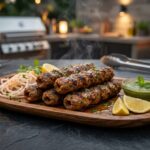
Your eyes are the best tools for judging doneness. Properly cooked seekh kebabs display a rich, mahogany brown exterior with darker charred spots scattered across the surface. The meat should look firm and hold its shape without any pink or red areas visible on the outside.
Watch for these telltale signs:
-
Color: Deep brown with black char marks
-
Texture: Firm to touch, no longer soft or squishy
-
Juices: Clear juices when pierced with a knife
-
Shrinkage: Kebabs will shrink slightly as moisture evaporates
Internal temperature should reach 160°F for beef or lamb. However, experienced grillers rely more on visual and tactile cues than thermometers, which can break apart the delicate kebab structure.
Basting Methods to Maintain Moisture
Basting keeps your seekh kebab recipe BBQ from drying out during the grilling process. Mix melted butter with a splash of lemon juice and fresh herbs for a simple but effective basting mixture. Apply with a silicone brush every 4-5 minutes during cooking.
Yogurt-based marinades naturally help retain moisture, but additional basting still makes a difference. Some grillers prefer oil-based bastes using ghee or olive oil mixed with garam masala and minced garlic.
Timing matters with basting – apply it during the indirect heat phase to prevent flare-ups. Never baste during the initial searing stage, as the added moisture can interfere with proper browning. Save the final baste for the last 2 minutes of cooking to create a glossy, flavorful finish.
Troubleshooting Common Kebab Problems
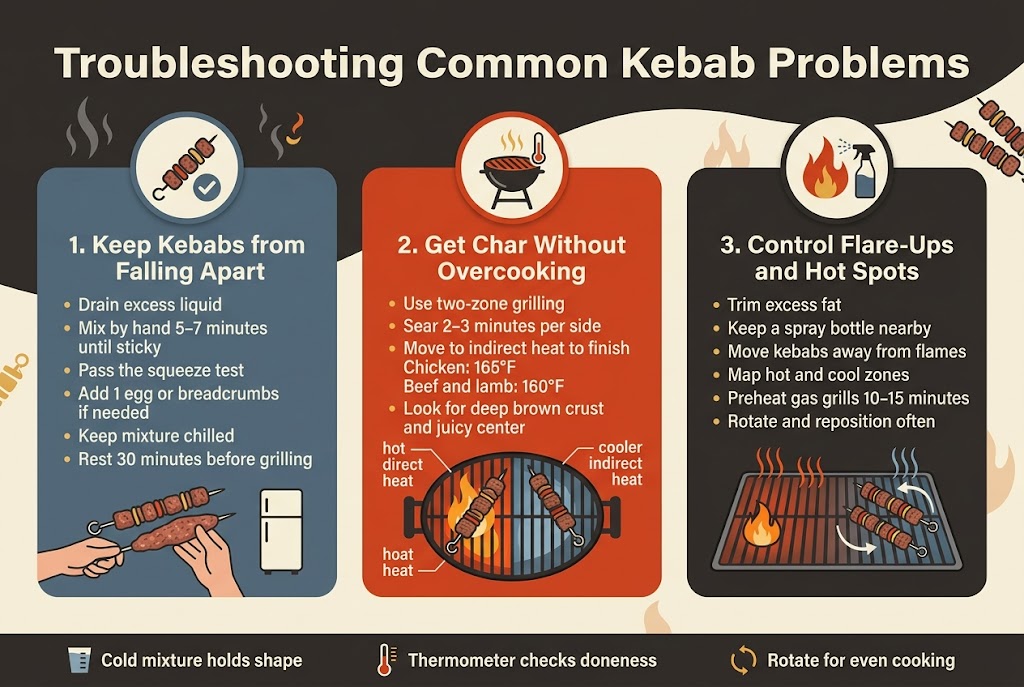
Getting your seekh kebabs to stay intact while grilling can feel like a balancing act, but the right approach makes all the difference. The secret starts with proper moisture control in your meat mixture. Ground meat that’s too wet will never hold together properly, so drain any excess liquid from your ingredients before mixing. When combining your spices and aromatics with the meat, work the mixture by hand for at least 5-7 minutes until it becomes sticky and cohesive. This develops the proteins that act like natural glue.
Your kebab mixture should pass the squeeze test – grab a handful and squeeze it tight. If it holds its shape when you open your hand, you’re ready to go. If it crumbles, add a beaten egg or a tablespoon of breadcrumbs to bind everything together. Temperature matters too. Keep your mixture chilled right up until grilling time, as cold meat holds its shape better on the grill.
When forming kebabs on skewers, pack the meat firmly but don’t overcompress it. Leave small gaps between pieces to allow even cooking. Wet your hands with cold water while shaping to prevent sticking. For seekh kebab recipe BBQ success, let your formed kebabs rest in the refrigerator for at least 30 minutes before grilling to help them set up properly.
Achieving Char without Overcooking Interior
Creating that perfect charred exterior while keeping the inside juicy requires a two-zone grilling approach. Set up your BBQ with a hot direct heat zone and a cooler indirect zone. Start your kebabs over direct heat to get that initial sear and char, then move them to the indirect zone to finish cooking through.
The key timing works like this: sear for 2-3 minutes per side over high heat, then move to medium heat for the remaining cooking time. Your internal temperature should reach 165°F for chicken or 160°F for beef and lamb. Use an instant-read thermometer inserted into the thickest part of the kebab to check doneness.
Watch for visual cues too. The exterior should develop a deep brown crust with slightly blackened edges, while the meat should feel firm but still have some give when pressed. If you’re getting too much char too quickly, raise your grill grate higher or move the kebabs to a cooler part of the grill. The goal is controlled charring that builds flavor without burning.
Managing Flare-ups and Uneven Heating
Flare-ups happen when fat drips onto hot coals or burners, creating sudden flames that can char your kebabs beyond recognition. Prevention beats reaction every time. Trim excess fat from your meat before grinding, and keep a spray bottle filled with water nearby for emergency flame control. When a flare-up occurs, move your kebabs to a cooler part of the grill immediately rather than trying to cook through the flames.
Uneven heating creates hot spots that cook some parts of your kebabs faster than others. Combat this by knowing your grill’s personality. Most grills have natural hot and cool zones – map these out during preheating by holding your hand 6 inches above different areas of the grate. You should feel consistent heat across the cooking surface.
For gas grills, preheat with all burners on high for 10-15 minutes, then adjust individual burners to create your heat zones. For charcoal, arrange coals in a two-level setup with more coals on one side. Rotate your kebabs every few minutes to ensure even cooking, and don’t be afraid to move them around the grill to take advantage of different heat levels as needed.
Conclusion
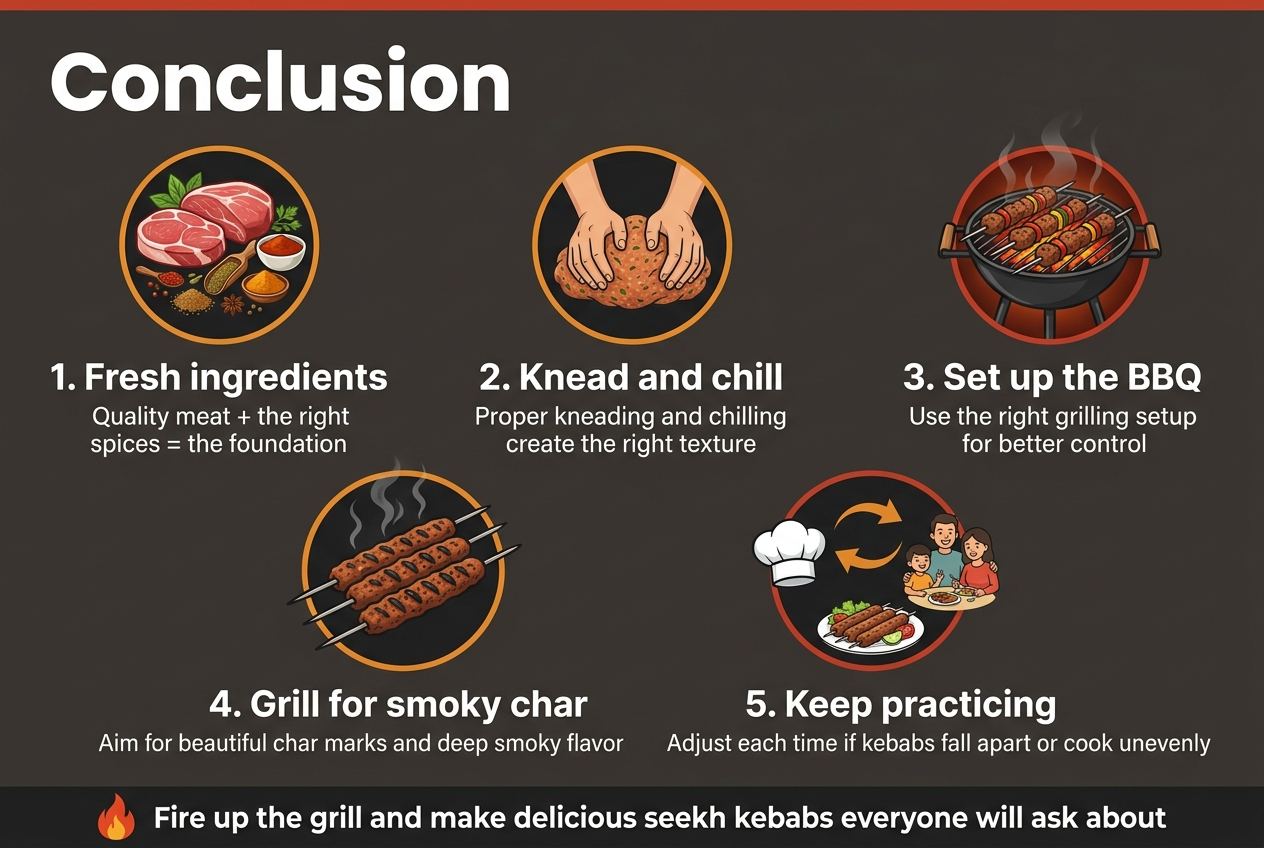
Don’t get discouraged if your first few attempts aren’t restaurant-perfect. Even experienced grillers run into issues like kebabs falling apart or uneven cooking. The key is to keep practicing and adjusting your technique based on what you learn each time. Fire up that grill, gather your ingredients, and start making some seriously delicious seekh kebabs that’ll have your family and friends asking for the recipe.
Want to read more Famous Food about click here.
Big Shoutout to the guys who made this blog happen UDM.