Best Jalebi Recipe – Crispy and Sweet Homemade Jalebi
Jalebi is one of the most beloved sweets in South Asia and the Middle East. Its bright orange color, crispy texture, and syrupy sweetness make it instantly recognizable. Whether you eat it at a street food stall in Lahore, a wedding in Delhi, or a festive gathering in Cairo, jalebi always brings a smile.
However, many people think making jalebi at home is difficult. The truth is, it is simpler than it looks. You just need the right batter consistency, proper fermentation, and a basic understanding of sugar syrup. Once you master these three things, you can make restaurant-quality jalebi in your own kitchen.
In this article, we will walk you through everything you need to know about jalebi. We will cover its history, the science behind its crunch, a step-by-step recipe, common mistakes to avoid, and expert tips to get it perfect every single time.
Moreover, we will share variations of jalebi that you may not have tried yet. From the thick and doughy Punjabi jalebi to the ultra-thin and crispy Lucknowi version, there is a style for everyone.
Therefore, whether you are a beginner in the kitchen or an experienced home cook, this guide will help you make the best jalebi of your life. So let us get started and bring this golden, syrupy treat straight to your plate.
What Is Jalebi and Where Did It Come From

Jalebi is a deep-fried sweet made from fermented flour batter. After frying, it is soaked in warm sugar syrup. The result is a crispy, juicy, and intensely sweet treat that melts in your mouth.
The history of jalebi is fascinating. Many food historians trace its origin to a medieval Arabic sweet called “Zalabia.” This sweet traveled through Persia and eventually reached the Indian subcontinent. Over centuries, local cooks adapted the recipe to match regional tastes and available ingredients.
Today, jalebi is deeply woven into South Asian food culture. In India and Pakistan, people serve it during Ramadan, Eid, weddings, and festivals. In many households, a plate of warm jalebi paired with cold rabri or a glass of milk is a classic breakfast combination.
Therefore, when you eat jalebi, you are not just enjoying a sweet. You are tasting centuries of culinary history.
The Science Behind the Perfect Crunch

Many people wonder why some jalebis are crispy while others turn soft and chewy. The answer lies in three key factors: fermentation, frying temperature, and sugar syrup consistency.
Fermentation is the most important step. When the batter ferments, it develops air bubbles and slight acidity. This gives the jalebi its characteristic lightness and crunch after frying. A properly fermented batter will bubble gently when you stir it.
Frying temperature matters just as much. If the oil is too cold, the jalebi absorbs too much oil and becomes greasy. If the oil is too hot, the outside burns before the inside cooks properly. The ideal temperature is around 160 to 170 degrees Celsius.
In addition, the sugar syrup must be at the right consistency. A one-string consistency syrup is ideal. This means when you take a small drop of syrup between your thumb and forefinger, it forms a single thread when you pull them apart.
Moreover, you should dip the fried jalebi in warm syrup immediately after frying. This ensures maximum absorption without making the jalebi soggy.
Ingredients You Will Need

Before you begin, gather all your ingredients. Good preparation always leads to better results.
For the Jalebi Batter:
- 1 cup all-purpose flour (maida)
- 2 tablespoons chickpea flour (besan) — optional but adds crunch
- 1 tablespoon plain yogurt
- A pinch of turmeric or a few drops of orange food coloring
- Warm water — enough to make a smooth, flowing batter
- A pinch of baking soda (added just before frying)
the Sugar Syrup:
- 1 cup sugar
- half a cup of water
- A pinch of saffron strands
- Half a teaspoon of cardamom powder
- 1 teaspoon lemon juice (prevents crystallization)
For Frying:
- Oil or ghee for deep frying
- A squeeze bottle or piping bag
These ingredients are simple and easy to find. However, the quality of your sugar and the freshness of your flour can make a real difference in the final taste.
Step-by-Step Jalebi Recipe

Now let us walk through the recipe in a clear and simple way. Follow each step carefully and you will get perfect results.
Step 1 – Prepare the Batter
Mix the all-purpose flour, chickpea flour, yogurt, and turmeric or food coloring in a bowl. Add warm water gradually and whisk until you get a smooth, lump-free batter. The batter should be flowing but not too thin. Think of it like a thick pancake batter consistency.
Cover the bowl with a clean cloth and leave it in a warm place for 8 to 12 hours. Overnight fermentation works best. In colder climates, you can keep the bowl inside a slightly warm oven with just the light on.
Step 2 – Make the Sugar Syrup
Add sugar and water to a saucepan over medium heat. Stir until the sugar dissolves completely. Add saffron and cardamom powder. Let the syrup simmer until it reaches one-string consistency. Add the lemon juice and stir once. Keep the syrup warm on a very low flame.
Step 3 – Check and Prepare the Batter
After fermentation, the batter should smell slightly tangy and look slightly bubbly. Add a pinch of baking soda and mix gently. Transfer the batter into a squeeze bottle or a piping bag with a small round nozzle.
Step 4 – Fry the Jalebi
Heat oil in a wide, flat pan. The oil should be about 1.5 to 2 inches deep. Test the temperature by dropping a tiny bit of batter in — it should rise to the surface within 2 to 3 seconds.
Squeeze the batter directly into the oil in circular spiral motions. Start from the center and move outward, or start from the outside and move inward. Each jalebi should have 2 to 3 rounds.
Fry until the jalebi turns golden and crispy. This usually takes about 2 minutes per side. Do not crowd the pan — fry 4 to 5 pieces at a time.
Step 5 – Soak in Syrup
Remove the fried jalebi using a slotted spoon and drop them directly into the warm sugar syrup. Let them soak for 30 to 45 seconds. Do not leave them in the syrup for too long or they will become soft.
Take them out and place them on a plate. Serve immediately for the best texture.
Tips for Getting the Perfect Jalebi Every Time

Even experienced cooks sometimes struggle with jalebi. Therefore, here are some expert tips that will help you avoid common mistakes.
Tip 1 – Do Not Skip Fermentation
Fermentation is not optional. It is what gives jalebi its unique flavor and texture. If you are in a hurry, you can add a little extra yogurt to speed up the process slightly. However, proper overnight fermentation always gives better results.
Tip 2 – Keep the Syrup Warm
Cold syrup will not absorb into the jalebi properly. Always keep your syrup on a very low flame while frying. If the syrup starts to thicken too much, add a splash of warm water and stir gently.
Tip 3 – Practice Your Spirals
Getting the spiral shape right takes a little practice. Before frying, try piping the batter on a flat surface to practice your hand movements. A smooth, steady hand will give you clean, uniform spirals.
Tip 4 – Use Ghee for Extra Flavor
Frying jalebi in pure ghee instead of oil gives it a richer, nuttier flavor. In many traditional recipes, especially in North India and Pakistan, ghee is the preferred fat for frying jalebi. However, ghee can be expensive, so a mix of ghee and oil also works well.
Tip 5 – Serve Fresh
Jalebi is always best when served fresh and warm. It begins to lose its crunch within an hour or two. Therefore, try to time your frying so that the jalebi reaches the table as hot and crispy as possible.
Popular Jalebi Variations You Should Try

Once you master the classic jalebi recipe, you can explore some exciting regional variations.
Punjabi Jalebi (Moti Jalebi)
This version is thicker and chewier than the classic jalebi. The batter is slightly denser, and the jalebi spirals are larger. Punjabi jalebi is often served with a thick, creamy layer of rabri poured on top. It is a popular street food in Lahore and Amritsar.
Lucknowi Jalebi
The jalebi from Lucknow is known for being ultra-thin and delicately crispy. The batter is thinner, and the spirals are tighter and more intricate. This version melts in your mouth almost instantly.
Instant Jalebi (Without Fermentation)
Some modern recipes skip fermentation and use baking powder or ENO fruit salt to achieve a light batter. These are called “instant jalebi.” While they are quicker to make, they do not have the same depth of flavor as the fermented version. However, they work well when you are short on time.
Paneer Jalebi
In this lesser-known variation, paneer (fresh cottage cheese) is added to the batter. This gives the jalebi a softer texture and a slightly richer taste. Paneer jalebi is popular in some parts of Rajasthan and Gujarat.
Best Ways to Serve Jalebi

Jalebi is versatile and pairs beautifully with several other foods and drinks.
The most classic pairing is jalebi with rabri. Rabri is a thick, sweetened reduced milk often flavored with cardamom and nuts. The combination of hot, crispy and cold, creamy rabri is absolutely heavenly.
In many Pakistani households, jalebi is served as a morning breakfast with a glass of warm milk. The is dipped into the milk and eaten straight away. The milk softens the jalebi slightly and creates a comforting, wholesome breakfast experience.
In India, jalebi is also paired with fafda, a savory chickpea flour snack, especially in Gujarat during festivals. The contrast between the salty, crunchy fafda and the sweet, syrupy jalebi is a flavor combination worth trying.
Furthermore, jalebi works beautifully as a dessert topped with crushed pistachios, a pinch of dried rose petals, and a few saffron strands. This presentation works well for dinner parties and festive occasions.
How to Store Jalebi Properly
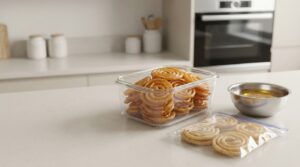
While jalebi is always best fresh, you can store it for a short time if needed.
Leave the jalebi at room temperature in an airtight container for up to one day. Do not refrigerate fresh jalebi, as the cold air makes it lose its texture quickly.
If you need to keep it longer, you can freeze the fried jalebi before dipping them in syrup. When ready to serve, thaw them at room temperature, warm them in an oven for a few minutes, and then dip them in fresh warm syrup.
However, nothing truly replaces the experience of freshly made jalebi. Therefore, try to make only as much as you plan to eat in one sitting.
Common Mistakes to Avoid
Many home cooks make a few simple mistakes that affect the quality of their . Knowing these mistakes in advance will save you time and frustration.
The first common mistake is making the batter too thin. A thin batter will not hold its shape in the oil and the spirals will break apart. The batter should be thick enough to hold a steady stream when squeezed from the bottle.
The second mistake is using cold oil. Always heat your oil properly before adding the batter. Cold oil leads to greasy, undercooked.
The third mistake is over-soaking in syrup. This makes the soft and soggy. Thirty to forty-five seconds of soaking is more than enough.
In addition, some people skip the lemon juice in the syrup. Lemon juice prevents the sugar from crystallizing as the syrup cools. Without it, your syrup may turn grainy and not absorb well into the.
Nutritional Overview of Jalebi
Jalebi is an indulgent sweet and is best enjoyed in moderation. It is high in sugar and carbohydrates, which provide a quick burst of energy. This is why it is traditionally served during fasting seasons like Ramadan it replenishes energy quickly after a long day of fasting.
A single medium-sized contains approximately 150 to 180 calories, depending on its size and the amount of syrup absorbed. It is not a low-calorie food, but as an occasional treat or a festive indulgence, it fits perfectly into a balanced lifestyle.
According to Healthline, sweets made in moderate quantities using natural ingredients like saffron and cardamom can be part of a varied and enjoyable diet when eaten mindfully.
The Cultural Significance of Jalebi
Beyond its taste, jalebi holds deep cultural meaning across South Asia and the Middle East.
In India and Pakistan, is associated with celebration. No festival feels complete without it. It is distributed during Eid as part of sweet boxes, offered at temples as prasad, and sold on every street corner during Diwali and other festivals.
Moreover, the USDA’s Food Data Central database, as referenced by many food researchers, acknowledges that fermented sweets like have been part of traditional food cultures for thousands of years. Their preparation reflects generations of culinary knowledge passed down through families.
Today, jalebi has also entered the modern food scene. Many high-end restaurants and cafes now serve jalebi-inspired desserts from jalebi cheesecakes toice cream sundaes. Chefs around the world are discovering this ancient sweet and reimagining it for contemporary audiences.
For more delicious traditional sweets and dessert inspiration, explore these recipes on Famous Food Blog:
- Traditional Gulab Jamun Recipe – Soft and Syrupy Homemade Dessert
- Crispy Pakora Recipe – Perfect Pakistani Street Food Snack
- Homemade Rabri Recipe – The Perfect Companion to Your Favorite Sweets
Conclusion
Jalebi is more than just a sweet. It is a celebration on a plate. Its golden spirals, crispy texture, and sugar-soaked sweetness carry the warmth of tradition, culture, and memory in every bite.
Making at home may feel intimidating at first. However, once you understand the basics proper fermentation, the right frying temperature, and a well-balanced sugar syrup everything comes together beautifully. The process is deeply satisfying, and the results are absolutely worth the effort.
Moreover, jalebi is incredibly versatile. You can serve it as a festive dessert, a street-style breakfast treat, or an elegant dinner party sweet. You can pair it with rabri, warm milk, or enjoy it on its own straight from the pan. Every way you eat it, delivers pure joy.
In addition, now that you know the regional variations, you can experiment beyond the classic recipe. Try the thick and hearty Punjabi style, the delicate Lucknowi version, or the rich paneer. Each one brings something unique to the table.
Therefore, the next time you crave something sweet, skip the store-bought option. Pull out your mixing bowl, let the batter ferment overnight, and fry up a fresh batch of homemade . Your family will thank you for it.
Share this recipe with someone who loves sweets, and do not forget to explore more traditional recipes right here on Famous Food Blog. Great food is always worth making from scratch.
Frequently Asked Questions
Q1. Why is my jalebi not crispy after frying?
The most common reason is that the oil temperature was too low during frying. Cold oil causes the jalebi to absorb too much grease instead of crisping up. Always heat your oil to around 160 to 170 degrees Celsius before adding the batter. In addition, make sure your batter is properly fermented and not too thin. A well-fermented batter with the right thickness is the foundation of crispy jalebi.
Q2. Can I make jalebi without fermentation?
Yes, you can make an instant version of jalebi by replacing the fermentation step with baking powder or ENO fruit salt. This speeds up the process significantly. However, the flavor will be slightly different. Fermented has a mild tanginess and a more complex taste that instant jalebi cannot fully replicate. For the best flavor and authentic texture, overnight fermentation is strongly recommended.
Q3. How long does homemade jalebi stay fresh?
Homemade jalebi is best eaten fresh and warm, ideally within 30 to 60 minutes of frying. After that, it begins to lose its crispiness as the sugar syrup softens the outer shell. If you need to store it, keep it in an airtight container at room temperature for up to one day. Avoid refrigerating jalebi as cold temperatures make it chewy and stiff. For longer storage, freeze the fried pieces before syrup dipping and re-fry them lightly before serving.
Want to read more Famous Food about click here.
Big Shoutout to the guys who made this blog happen UDM.