Mango Smoothie Recipe Easy | Healthy Breakfast Smoothie Idea
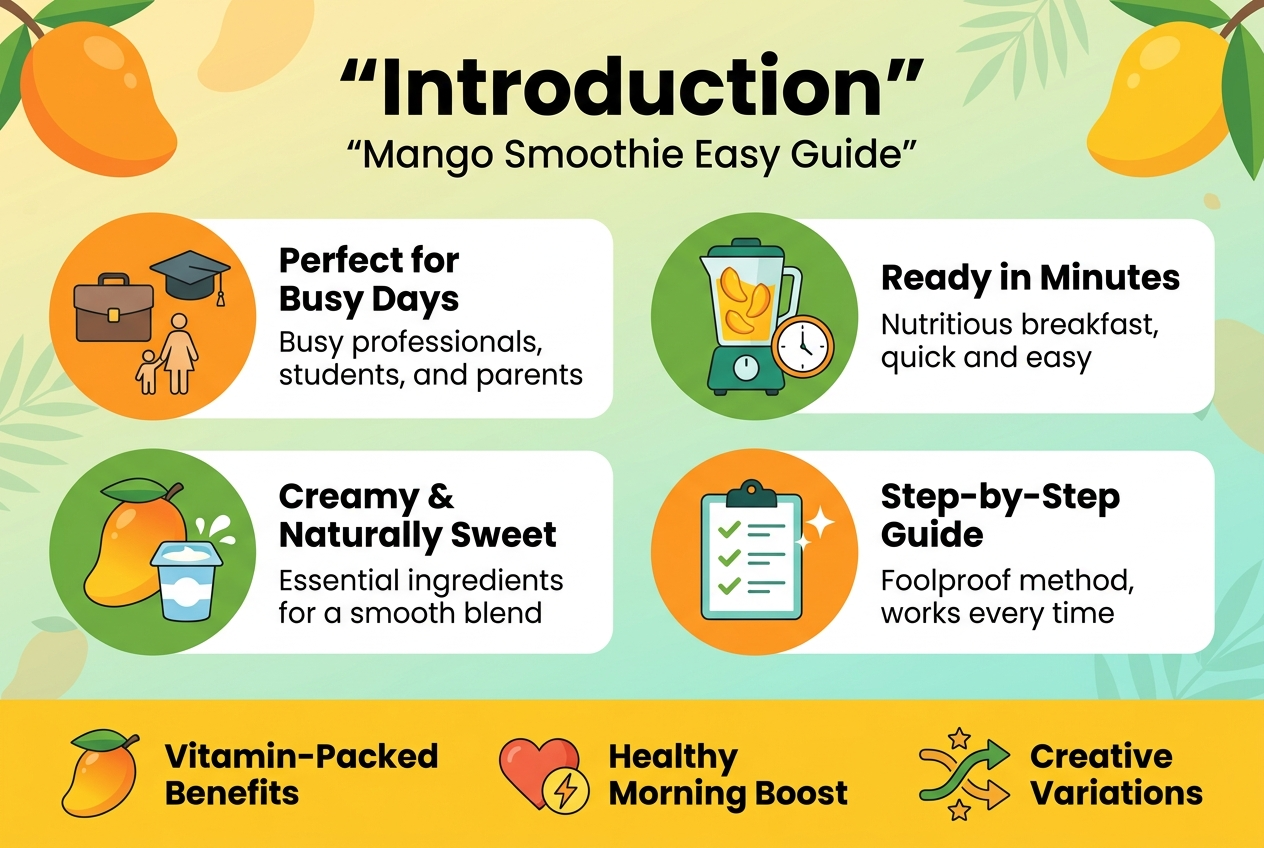
We’ll walk you through the essential ingredients that make this smoothie creamy and naturally sweet, plus share our foolproof step-by-step method that works every time. You’ll also discover the impressive nutritional benefits of mangoes and learn creative variations to keep your breakfast routine fresh and exciting.
Essential Ingredients for the Perfect Mango Smoothie
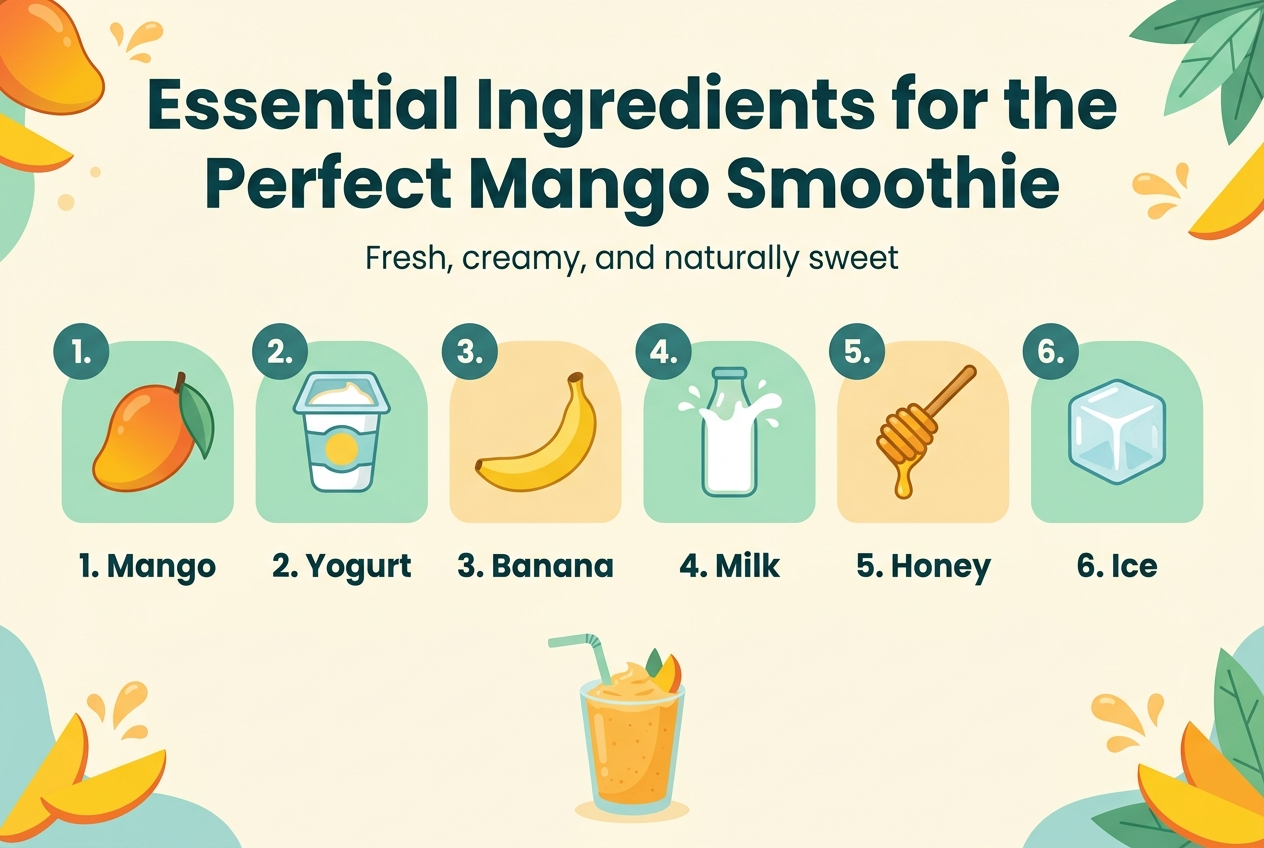
The foundation of any outstanding mango smoothie recipe easy to make starts with choosing the right mango. Fresh mangoes deliver unmatched flavor when they’re perfectly ripe – think soft to the touch with a sweet aroma near the stem. However, frozen mango chunks offer incredible convenience and consistent sweetness year-round.
Fresh mangoes work best when you can find varieties like Alphonso, Kent, or Tommy Atkins at peak ripeness. The fruit should yield slightly to gentle pressure without being mushy. If your mangoes are still firm, let them ripen at room temperature for 2-3 days.
Frozen mango eliminates the guesswork and prep time since it’s already peeled, chopped, and flash-frozen at optimal ripeness. This option also creates naturally thick, creamy smoothies without needing ice. Pre-frozen mango chunks blend more easily and create that perfect smoothie texture we all crave.
Liquid Base Options for Optimal Consistency
Your liquid choice dramatically affects both flavor and texture. Coconut milk creates rich, tropical smoothies with natural sweetness. Use full-fat canned coconut milk for ultimate creaminess or light coconut milk for fewer calories.
Regular dairy milk works beautifully for classic smoothies, while plant-based alternatives like almond, oat, or cashew milk add unique flavors. Almond milk keeps things light and nutty, while oat milk contributes natural sweetness and extra creaminess.
For thinner smoothies, try coconut water or even plain water. Orange juice amplifies the tropical vibe but adds extra natural sugars. Start with ½ cup of liquid and adjust gradually – you can always add more but can’t take it back.
Natural Sweeteners That Enhance Flavor
Ripe mangoes already pack natural sweetness, but sometimes you want that extra touch. Honey blends seamlessly and adds floral notes that complement mango beautifully. Use raw honey for maximum nutritional benefits.
Maple syrup brings warm, caramel-like sweetness that pairs wonderfully with coconut milk bases. Dates, especially Medjool varieties, provide fiber along with sweetness – just remove the pits and blend well.
Agave nectar dissolves easily and has a neutral flavor profile. For zero-calorie options, stevia works well in small amounts. Start with just a teaspoon of any sweetener and taste before adding more.
Optional Protein Boosters for Sustained Energy
Transform your mango smoothie into a complete breakfast by adding protein sources. Vanilla protein powder complements mango’s tropical flavor perfectly. Start with half a scoop to avoid overwhelming the taste.
Greek yogurt creates incredibly creamy smoothies while adding probiotics and protein. Plain varieties work best since they won’t compete with the mango flavor. For dairy-free options, try coconut yogurt or silken tofu.
Nut butters like almond or cashew butter add healthy fats and protein while creating luxurious texture. Just one tablespoon transforms your smoothie into a satisfying meal replacement. Chia seeds provide omega-3s and create interesting texture when soaked first.
Simple Step-by-Step Preparation Method
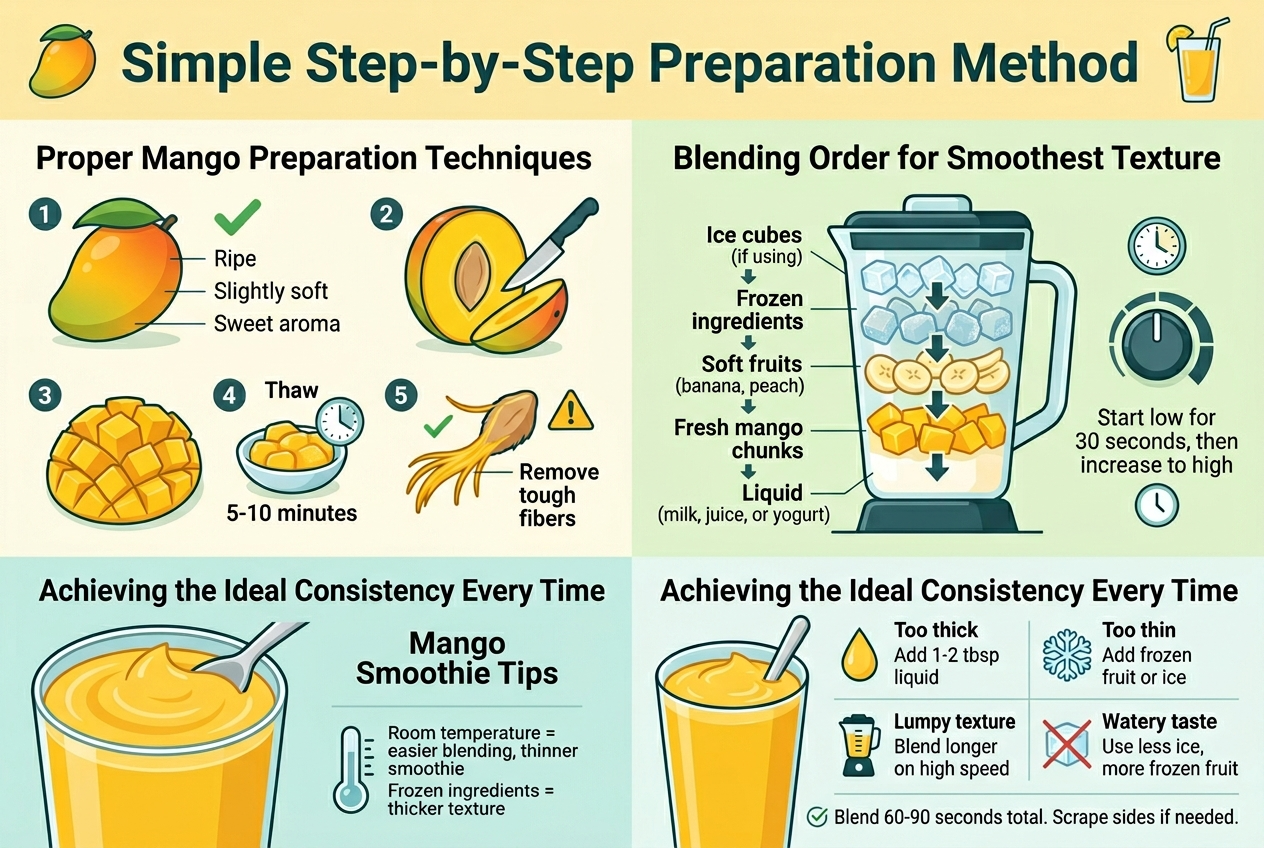
Fresh mangoes create the best foundation for your mango smoothie recipe easy preparation. Start by choosing ripe mangoes that give slightly when pressed but aren’t mushy. The skin should have a sweet aroma near the stem end.
Cut the mango by slicing along both sides of the large, flat pit in the center. Score the flesh in a crosshatch pattern without piercing the skin, then push the skin up to pop out the cubes. This hedge-hog method makes removal simple and clean.
For frozen mango preparation, thaw the pieces for 5-10 minutes before blending. This prevents your blender from working too hard while still maintaining that thick, frosty texture. Frozen mango actually works wonderfully in smoothies because it eliminates the need for ice, which can water down the flavor.
Remove any tough fibers you might encounter, especially near the pit area. These can create an unpleasant stringy texture in your finished smoothie.
Blending Order for Smoothest Texture
The sequence you add ingredients makes a huge difference in achieving that perfectly smooth consistency. Always start with your liquid base at the bottom of the blender. This helps the blades move freely and creates better circulation.
Add your mango pieces next, followed by any softer fruits like banana. Place frozen ingredients and ice cubes last, as they need the most blending power. This layering technique prevents ingredients from getting stuck and ensures even mixing.
Optimal Blending Sequence:
-
Liquid (milk, juice, or yogurt)
-
Fresh mango chunks
-
Soft fruits (banana, peach)
-
Frozen ingredients
-
Ice cubes (if using)
Start blending on low speed for 30 seconds, then gradually increase to high speed. This prevents chunks from flying around and gives you better control over the texture.
Achieving the Ideal Consistency Every Time
The perfect mango smoothie should be thick enough to coat a spoon but still flow easily from the blender. If your smoothie turns out too thick, add liquid one tablespoon at a time while blending. Too thin? Add more frozen mango or a few ice cubes.
Consistency Troubleshooting:
| Problem | Solution |
|---|---|
| Too thick | Add 1-2 tbsp liquid |
| Too thin | Add frozen fruit or ice |
| Lumpy texture | Blend longer on high speed |
| Watery taste | Use less ice, more frozen fruit |
Temperature plays a key role in consistency. Room temperature ingredients blend more easily but create a thinner smoothie. Frozen ingredients give you that thick, milkshake-like texture but require more powerful blending.
Blend for 60-90 seconds total for the smoothest results. Stop and scrape down the sides if needed, then blend again. The extra time investment pays off with a completely smooth, restaurant-quality texture that makes your mango smoothie recipe easy to perfect every single time.
Nutritional Benefits of Starting Your Day with Mango Smoothies
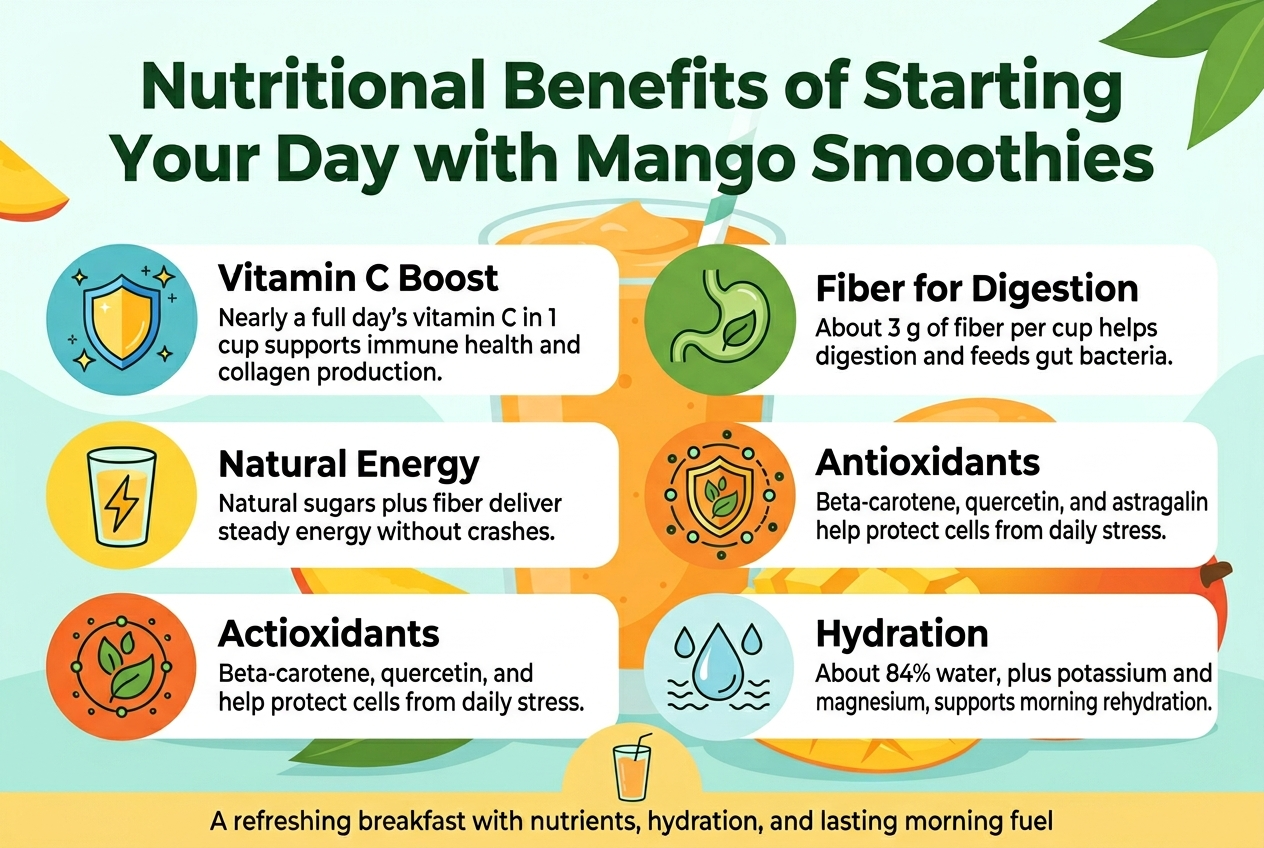
A single cup of mango contains nearly your entire daily vitamin C requirement, making this easy mango smoothie recipe a powerhouse breakfast choice. When you blend fresh or frozen mango chunks into your morning routine, you’re giving your immune system the fuel it needs to fight off infections and stay strong throughout the day. This vitamin C content actually gets absorbed better in liquid form, so your smoothie delivers faster immune benefits than eating the fruit whole.
The beauty of starting your morning with vitamin C is that it sets up your body’s defenses right from the start. Your white blood cells get the support they need to function properly, and your body can better produce collagen for healthy skin and tissue repair while you go about your day.
Fiber content for digestive health
Mangoes pack about 3 grams of fiber per cup, which might not sound like much, but it makes a real difference in your digestive health. This soluble fiber helps regulate your digestive system, keeping things moving smoothly and preventing that sluggish feeling many people experience in the morning.
The fiber in your mango smoothie also feeds the beneficial bacteria in your gut, creating a healthier microbiome that supports everything from mood regulation to better nutrient absorption. Unlike processed breakfast foods that can leave your digestive system working overtime, this natural fiber works with your body’s rhythms.
Natural energy without sugar crashes
The natural sugars in mangoes come packaged with fiber and nutrients that slow down absorption, giving you steady energy instead of the sharp spikes and crashes you get from processed breakfast foods. This means you’ll feel energized and focused throughout your morning without reaching for another coffee or snack an hour later.
Your body processes the fructose in mangoes differently than refined sugar, converting it to energy more gradually. This sustained release keeps your blood sugar stable and your energy levels consistent, making it easier to tackle your morning tasks with sustained focus.
Antioxidants for cellular protection
Mangoes contain powerful antioxidants like beta-carotene, quercetin, and astragalin that protect your cells from daily damage. These compounds neutralize free radicals that build up from stress, pollution, and normal metabolism. Starting your day with these protective nutrients gives your body a head start on cellular repair and maintenance.
The beta-carotene in mangoes also converts to vitamin A in your body, supporting eye health and skin regeneration. When you make this smoothie part of your regular breakfast rotation, you’re essentially giving your cells a daily shield against premature aging and oxidative stress.
Hydration benefits for morning wellness
After 7-8 hours without water, your body needs rehydration, and mangoes are about 84% water content. This makes your smoothie an excellent way to kickstart your hydration while getting nutrients at the same time. Proper hydration first thing in the morning improves cognitive function, helps regulate body temperature, and supports kidney function throughout the day.
The natural electrolytes in mangoes, including potassium and magnesium, help your body retain and use this hydration more effectively than plain water alone. This combination supports better muscle function and helps prevent the afternoon fatigue that often comes from inadequate morning hydration.
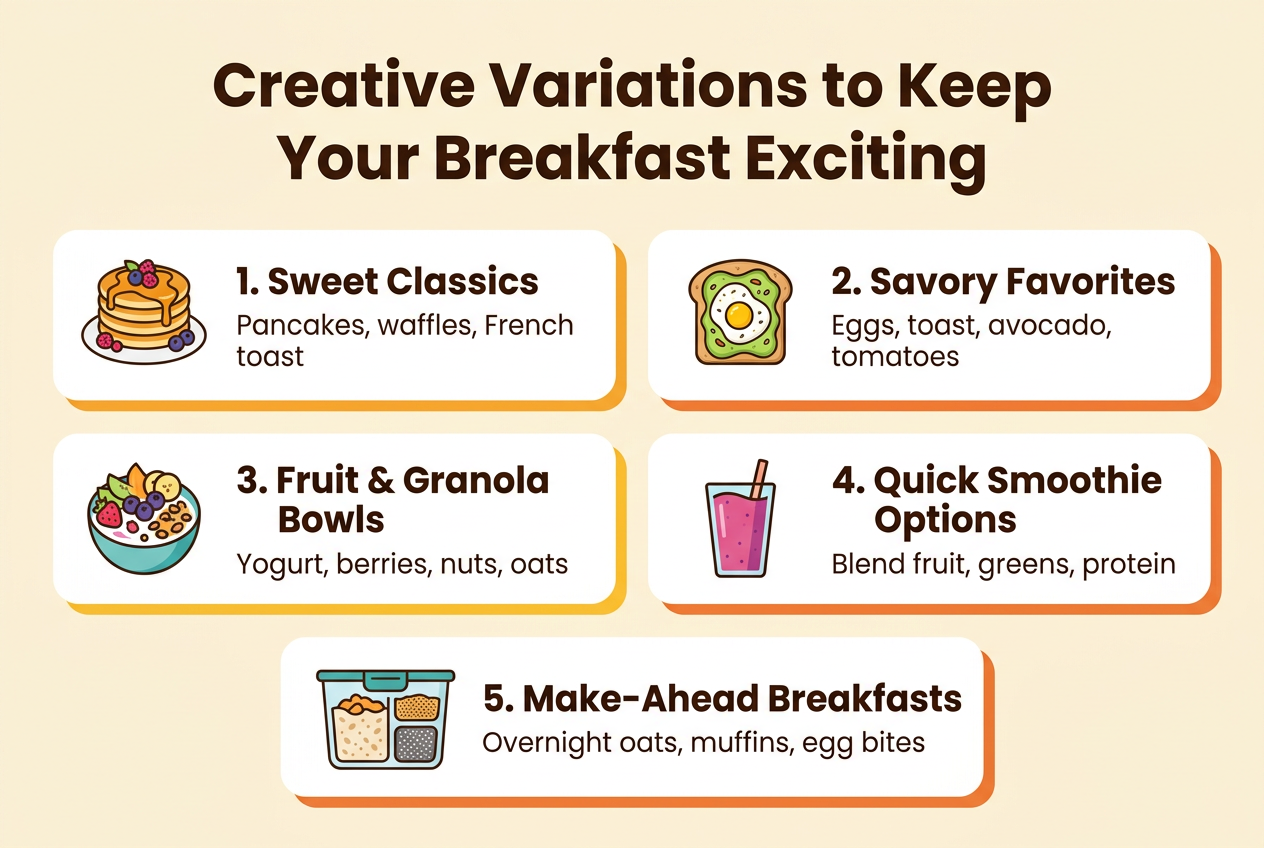
Creative Variations to Keep Your Breakfast Exciting
Tropical Twist Combinations with Coconut and Pineapple
Transform your basic mango smoothie into a vacation-worthy treat by adding coconut and pineapple. These ingredients create an island paradise flavor that makes every sip feel like a mini getaway. Start with half a cup of fresh or frozen pineapple chunks alongside your mango base. The natural acidity of pineapple balances the sweetness of mango perfectly while adding vitamin C and digestive enzymes.
Coconut brings richness and healthy fats to your smoothie. You can use canned coconut milk for creaminess, coconut water for natural electrolytes, or shredded coconut for texture. Mix and match these options based on your mood and nutritional goals. A splash of coconut milk with coconut water creates the perfect balance of flavor and consistency.
Try this winning combination: one cup frozen mango, half cup pineapple, quarter cup coconut milk, half cup coconut water, and a tablespoon of shredded coconut. Blend until smooth and garnish with toasted coconut flakes. This tropical version delivers healthy fats, natural sugars, and enough flavor complexity to keep your taste buds interested all week long.
Green Smoothie Upgrades with Spinach Additions
Adding spinach to your mango smoothie recipe easy preparation boosts nutrition without compromising taste. Fresh baby spinach works best because it blends smoothly and has a milder flavor than mature leaves. Start with just a handful and gradually increase the amount as you get used to the taste.
The natural sweetness of mango masks any veggie flavor, making this perfect for anyone hesitant about green smoothies. Spinach adds folate, iron, vitamins A and K, plus antioxidants that support energy levels throughout the morning. Frozen spinach works too, but fresh gives better texture and color.
For the best results, blend spinach with liquid ingredients first, then add your mango and other fruits. This technique ensures smooth blending without leafy chunks. A winning green combo includes one cup mango, two handfuls of spinach, half a banana for extra creaminess, coconut water, and a squeeze of lime juice. The lime brightens flavors while adding vitamin C that helps your body absorb the iron from spinach.
Protein-Packed Versions for Active Lifestyles
Active people need more protein to support muscle recovery and sustained energy levels. Your mango smoothie can easily become a post-workout powerhouse with the right additions. Greek yogurt is the simplest protein boost, adding creamy texture while delivering 15-20 grams of protein per serving.
Protein powder blends seamlessly into mango smoothies. Vanilla or unflavored varieties work best to avoid competing with the fruit flavors. Start with half a scoop and adjust based on your protein needs and taste preferences. Plant-based options like pea or hemp protein work just as well for those avoiding dairy.
Natural protein sources offer additional benefits beyond muscle support. Try adding a tablespoon of almond butter for healthy fats and protein, or throw in some chia seeds for omega-3 fatty acids plus fiber. Hemp hearts provide complete protein and blend invisibly into smoothies.
A high-protein version might include one cup mango, half cup Greek yogurt, one scoop vanilla protein powder, almond milk, and a tablespoon of ground flaxseed. This combination delivers 25-30 grams of protein while maintaining the delicious mango flavor you crave. Perfect for busy mornings when you need sustained energy and muscle-building nutrients.
Time-Saving Tips for Busy Morning Routines
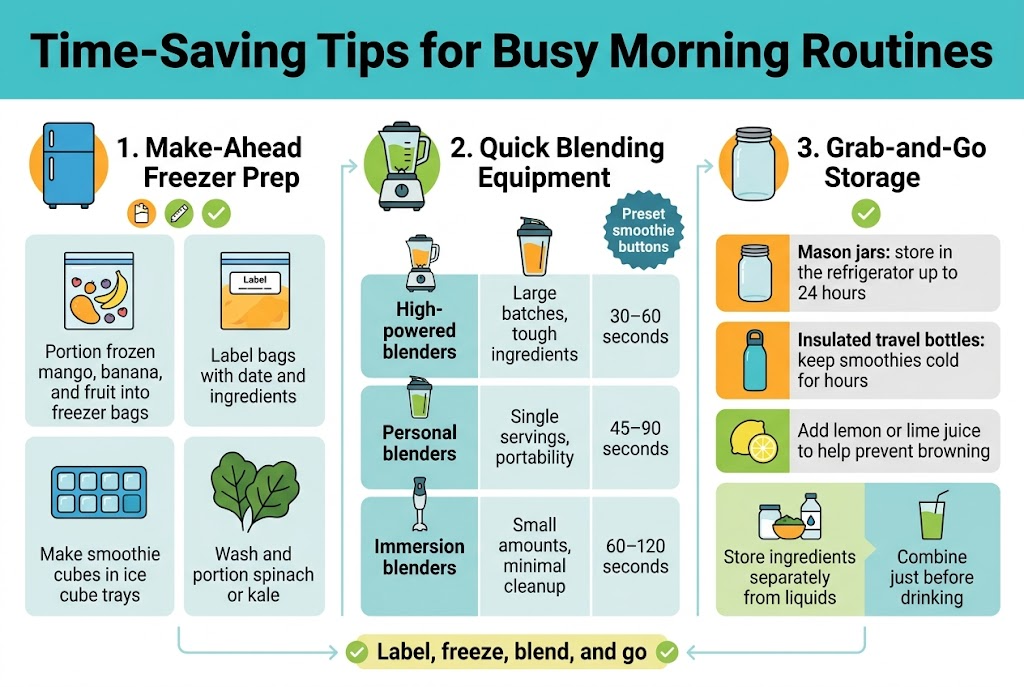
Preparing your mango smoothie ingredients ahead of time can transform your morning routine. Portion individual servings of frozen mango chunks, banana slices, and any other fruits into freezer bags or containers. Label each bag with the date and ingredients for easy identification. This mango smoothie recipe easy approach saves precious minutes when you’re rushing out the door.
Create smoothie cubes by blending your favorite combinations and freezing them in ice cube trays. Once frozen, transfer the cubes to freezer bags. Each morning, simply add liquid and blend for an instant smoothie. Wash and portion fresh greens like spinach or kale into individual freezer portions, so you can add nutrients without extra prep time.
Pre-made smoothie packs work wonderfully for meal prep enthusiasts. Combine all dry and frozen ingredients in labeled containers or bags, then store in the freezer for up to three months. When ready to blend, add your preferred liquid and you’re set.
Equipment recommendations for quick blending
Investing in the right blender makes all the difference for morning efficiency. High-powered blenders like Vitamix or Blendtec can pulverize frozen fruits in under 60 seconds, creating silky smooth textures without chunks. Personal-sized blenders with travel cups, such as NutriBullet or Magic Bullet, offer convenience for single servings and easy cleanup.
| Blender Type | Best For | Average Blend Time |
|---|---|---|
| High-powered | Large batches, tough ingredients | 30-60 seconds |
| Personal blenders | Single servings, portability | 45-90 seconds |
| Immersion blenders | Small amounts, minimal cleanup | 60-120 seconds |
Consider blenders with preset programs that automatically adjust speed and timing for smoothies. Some models feature “smoothie” buttons that eliminate guesswork and deliver consistent results every time.
Storage solutions for grab-and-go convenience
Mason jars make excellent storage containers for prepared smoothies. Fill jars almost to the top, leaving minimal air space to prevent oxidation, and store in the refrigerator for up to 24 hours. Glass containers preserve flavor better than plastic and won’t absorb odors or stains.
Insulated travel bottles keep smoothies cold during commutes and maintain optimal texture for hours. Look for bottles with wide mouths for easy pouring and cleaning. Some travel containers feature built-in straws or flip-top lids for convenient sipping while driving or walking.
For maximum freshness, add citrus juice like lime or lemon to your smoothies before storing. The natural acids help preserve color and prevent browning, especially important for light-colored fruits. Store smoothie ingredients separately from liquids when possible, combining them just before consumption for the best taste and texture.
Conclusion
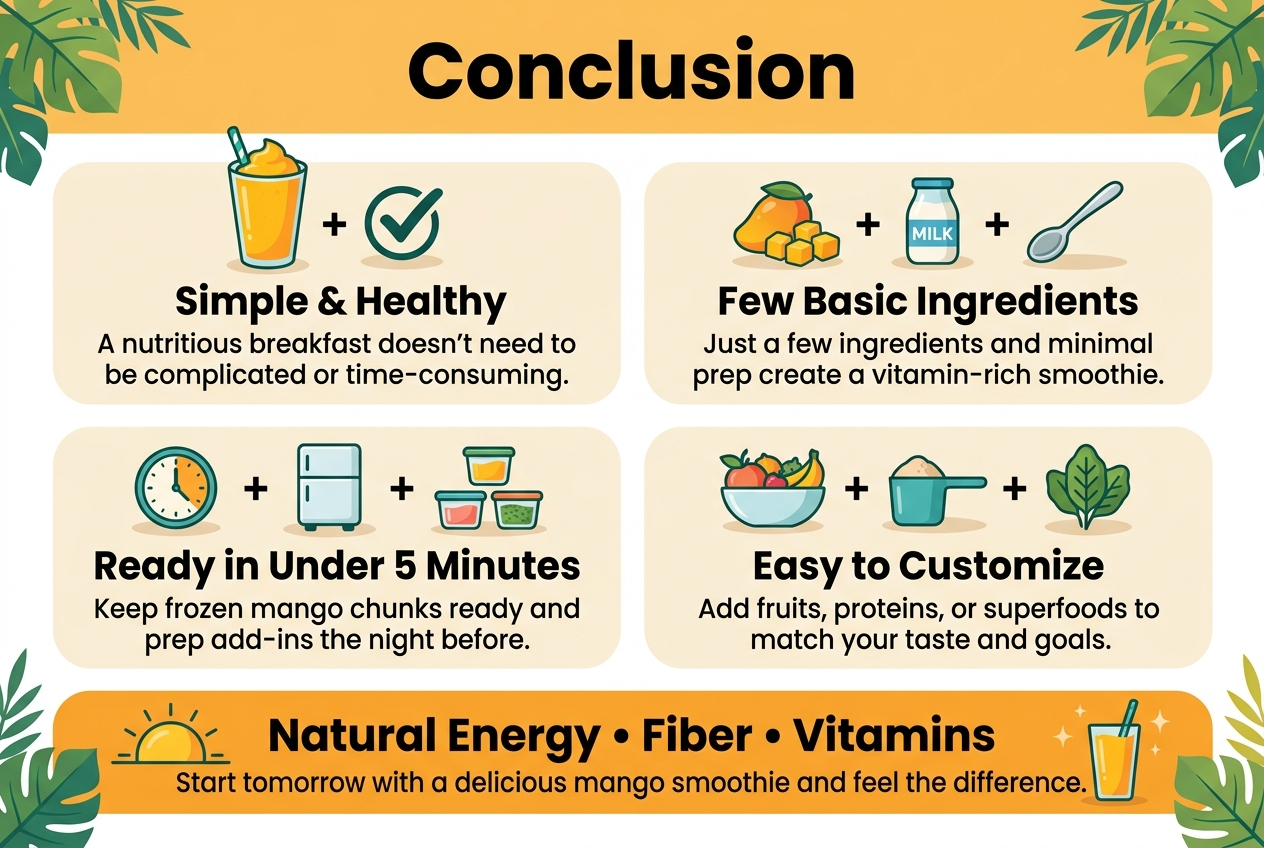
Start your tomorrow morning with this delicious mango smoothie and experience the difference a nutritious breakfast can make in your energy levels and overall well-being. Keep frozen mango chunks ready in your freezer, prep your add-ins the night before, and you’ll have a restaurant-quality smoothie ready in under five minutes. Your body will thank you for choosing this vitamin-rich alternative over processed breakfast options, and your taste buds will love every tropical sip.
- Summer Drinks Recipes | Tasty Homemade Drinks for Summer
- Best Jalebi Recipe – Crispy and Sweet Homemade Jalebi
- Halwa Puri Cholay – Famous Lahori Breakfast Loved by Everyone
learn more about this article then vist wikipedia
want to read more article then check this